Living with polycystic ovary syndrome can mean dealing with symptoms that are rarely discussed openly. For many women, unwanted facial or body hair is one of the most frustrating. Hair may return quickly after shaving, waxing can irritate the skin, and repeated plucking often leads to ingrown hairs or dark marks.
This naturally raises a question: does laser hair removal work if you have PCOS?
The honest answer is yes, it can achieve a significant and lasting reduction in suitable hair. However, PCOS-related hair growth behaves differently from ordinary hair growth. You may need a longer initial course and more maintenance than someone whose hair is not hormonally influenced.
If you are considering laser hair removal for PCOS in Dubai, knowing what the treatment can and cannot do will help you begin with realistic expectations.
Why does PCOS cause unwanted hair?
PCOS can be associated with higher androgen levels or increased sensitivity to these hormones. Androgens can encourage coarse, dark hair to develop in areas where women may not usually expect it, including the chin, upper lip, jawline, neck, chest, abdomen and back. This pattern is known as hirsutism.
Laser treatment targets existing follicles; it does not treat the hormonal condition behind their activity. A successfully treated follicle may stop producing coarse hair, but hormonal changes can stimulate previously inactive follicles in the future. That is why PCOS hair reduction should be viewed as a managed, long-term process rather than a one-off cure.
A medical assessment is also important when facial or body hair appears suddenly, becomes noticeably heavier or is accompanied by irregular periods, acne or scalp thinning. Laser can address unwanted hair, but it cannot diagnose or manage PCOS itself.
Does laser hair removal work when you have PCOS?
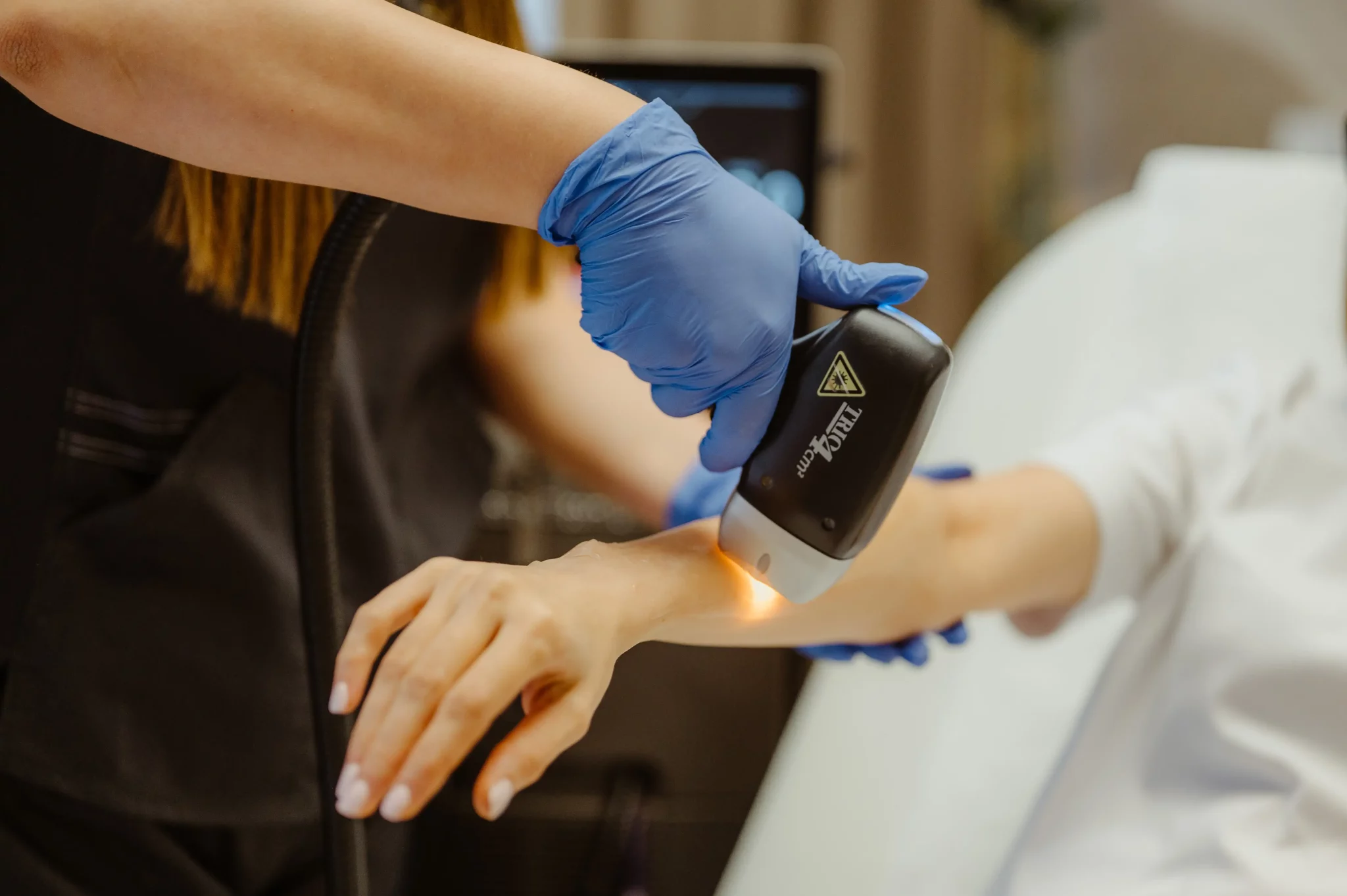
Laser hair removal uses controlled light energy that is absorbed by pigment in the hair. The resulting heat damages the follicle and reduces its ability to produce another strong hair. Because only follicles in an active growth phase respond effectively, several appointments are needed.
Dark, coarse hair generally responds better than very fine, blond, grey, white or red hair. The 2023 International Evidence-based PCOS Guideline recommends that laser and light therapies be considered for facial hirsutism. It also notes that women with PCOS may require more sessions than women with non-hormonal hirsutism. Wavelength and treatment delivery should be selected according to skin and hair colour.
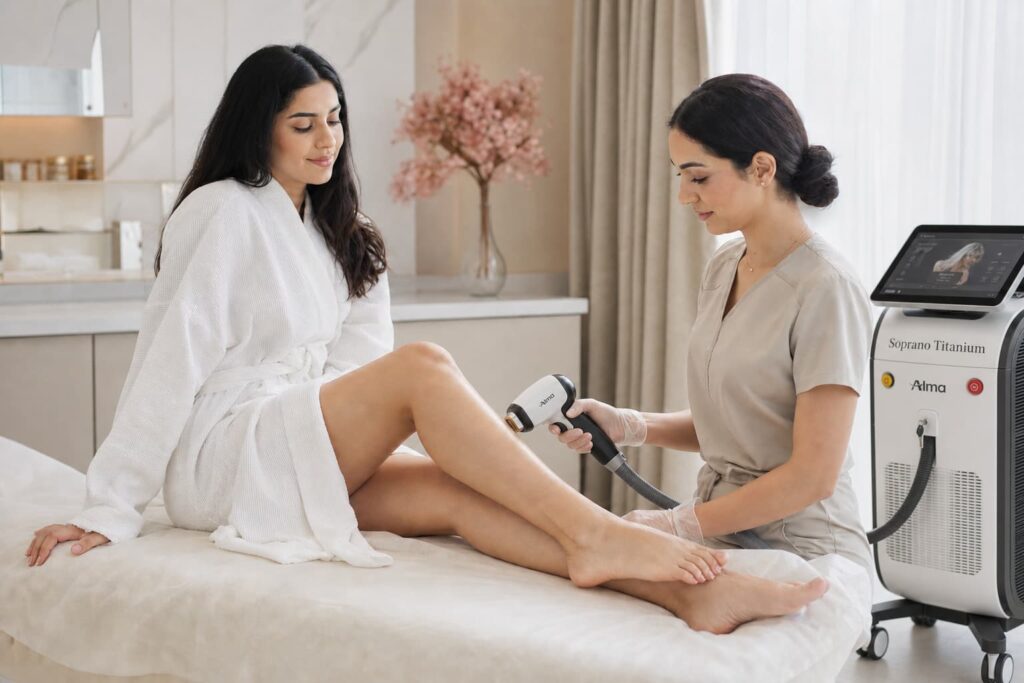
At Roxana Aesthetics Clinic, laser hair removal in Dubai is performed using Soprano Titanium technology. Its combination of laser wavelengths and integrated cooling allows the practitioner to tailor treatment to different skin tones, hair types and body areas.
What results should you realistically expect?
With a consistent course, many patients notice that treated hair grows back more slowly and feels finer. Some areas may become patchier after the first few appointments, while more substantial reduction develops over the complete treatment course.
The aim is long-term hair reduction, not a guarantee that every hair will disappear permanently. Results vary according to:
- Hair colour, thickness and density
- Skin tone and recent sun exposure
- The body or facial area being treated
- Hormonal activity and PCOS management
- Treatment timing and consistency
- The laser technology and settings used
Roxana’s standard guidance indicates that many patients begin with approximately six to eight sessions, commonly spaced four to six weeks apart. With PCOS, that course may need to be extended. Facial areas such as the chin and jawline can also require closer monitoring because they are especially sensitive to hormonal changes.
Comparing photographs under consistent lighting can provide a better picture of progress than checking the mirror every day. Useful signs include longer gaps between shaving, fewer ingrown hairs and softer regrowth—not simply whether every hair has vanished.
Why are maintenance sessions important?
For someone without a hormonal condition, an occasional top-up may be enough after the initial course. With PCOS, newly activated follicles can produce coarse hair months or years later. This does not necessarily mean the original treatment failed.
Laser hair removal maintenance sessions are scheduled according to visible regrowth rather than an inflexible calendar. Some women may benefit from a top-up every few months at first, while others can leave considerably longer intervals. Facial and body areas may follow different schedules.
Hormonal changes, pregnancy, menopause, medication changes or a period when PCOS symptoms become less controlled can alter the pattern. Your maintenance plan should therefore be reviewed over time instead of simply repeating the original settings.
Working with the doctor managing your PCOS may help address the hormonal driver. The international guideline notes that, when medically appropriate, hormonal treatment prescribed by a qualified doctor may improve hair reduction and maintenance when combined with laser. Do not start or change medication solely for cosmetic purposes without medical advice.
What are the risks?
Temporary warmth, redness and mild swelling around follicles are common after treatment. These effects usually settle, but the exact recovery experience varies.
Less common complications include blistering, burns, changes in pigmentation and scarring. Risk can increase when unsuitable settings are used, the skin is recently tanned or important medical information has not been disclosed. Dubai’s strong year-round sunlight makes careful sun protection especially important.
There is also a rare risk called paradoxical hypertrichosis, in which hair near a treated area becomes thicker or more noticeable. It is reported more often around hormonally sensitive facial areas and where the hair is fine rather than coarse. A careful assessment helps the practitioner decide which hairs should be treated and which may be better left alone.
The American Academy of Dermatology advises patients to disclose recent tanning, a tendency to scar, previous keloids, cold sores and medicines—including isotretinoin—before treatment. It also recommends avoiding tanning and using broad-spectrum, water-resistant SPF 30 or higher.
Tell your practitioner if you are pregnant or may be pregnant. Roxana does not list laser hair removal as suitable during pregnancy, so treatment should be postponed and discussed with your healthcare provider.
How to improve safety and results
A good outcome begins before the laser is switched on. During your consultation, discuss your PCOS diagnosis, medications, previous laser experiences, tendency toward pigmentation and how your hair has changed over time.
Before each appointment:
- Avoid waxing, threading or plucking, as the follicle needs to remain available for treatment.
- Shave according to your practitioner’s instructions.
- Avoid tanning and disclose recent sun exposure.
- Report new medication or changes in your health.
- Arrive with clean skin and no deodorant, perfume or irritating products on the treatment area.
After treatment, follow the clinic’s individual instructions. Protect exposed skin from the sun, avoid scratching or aggressively exfoliating the area, and do not treat temporary redness with unapproved active products. Contact the clinic if you develop blistering, severe pain or a skin reaction that does not settle as expected.
Creating a wider PCOS skin and hair plan
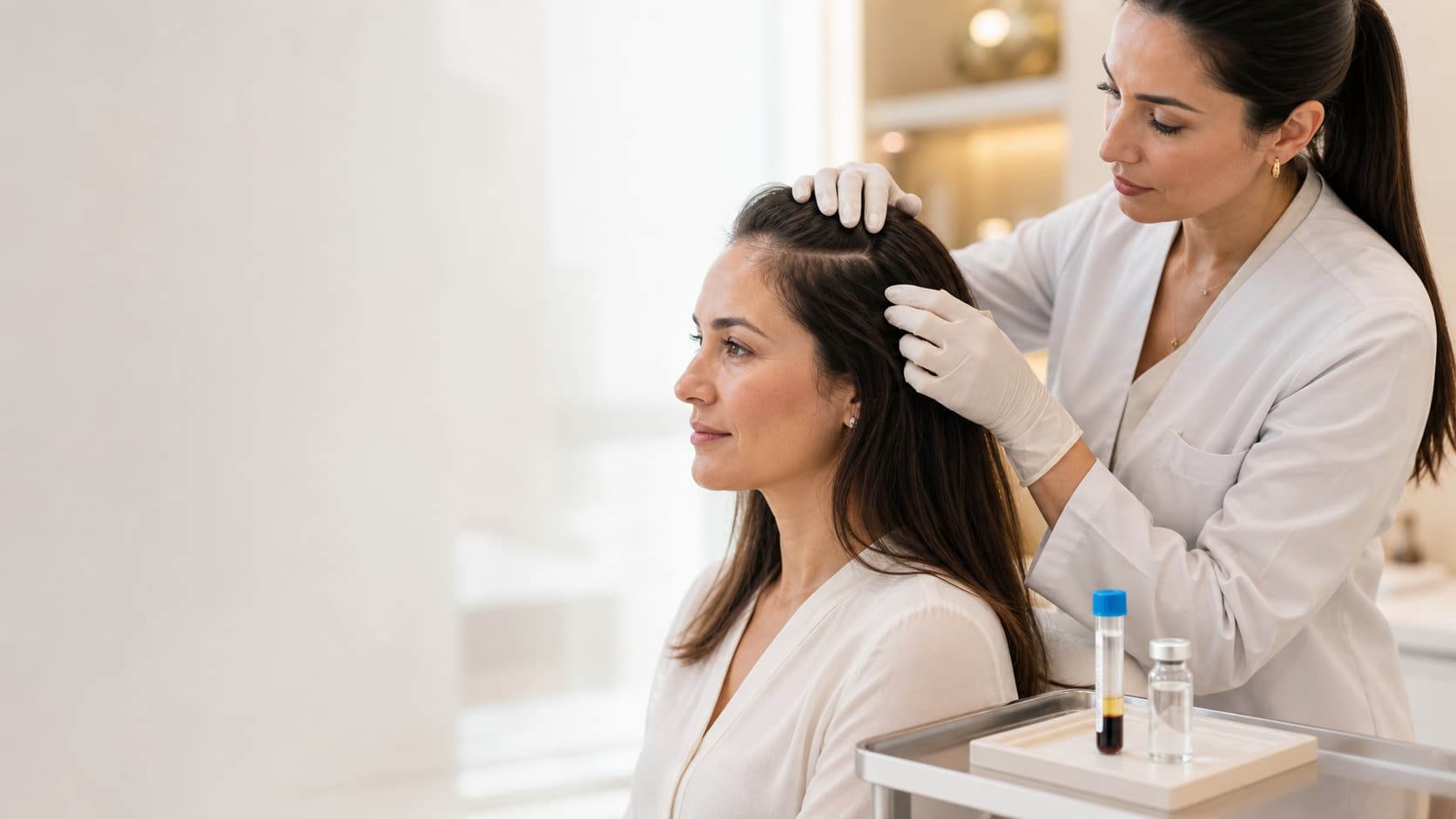
PCOS may affect more than facial and body hair. Some women also experience breakouts, uneven pigmentation or scalp thinning. These concerns should be assessed separately rather than assuming one treatment will solve all of them.
Where appropriate, Roxana’s related services include an acne facial in Dubai for acne-prone skin and a personalised pigmentation treatment plan for dark spots or uneven tone. If scalp shedding is a concern, the clinic also provides hair-loss treatment consultations.
These treatments do not replace medical PCOS care. Their role is to address specific aesthetic concerns after an appropriate assessment.
Frequently asked questions
Is PCOS facial hair removal in Dubai permanent?
Laser offers long-term reduction rather than guaranteed permanent removal. Treated hairs may become finer and less frequent, but PCOS can stimulate new follicles. Maintenance may therefore be necessary.
How many sessions will I need?
Six to eight sessions is a common starting range at Roxana, but women with PCOS may require additional appointments. Your hair thickness, treatment area, skin tone and response will influence the final number.
Is laser suitable for every facial hair?
No. Coarse, pigmented hairs are usually better targets than pale or very fine “peach fuzz.” Treating unsuitable fine hair may provide little benefit and could increase the risk of unwanted stimulation. This is why an in-person assessment matters.
Is Soprano Titanium laser in Dubai suitable for darker skin?
Soprano Titanium is designed to accommodate a wide range of skin tones through combined wavelengths and adjustable settings. Suitability still needs to be assessed individually, particularly if your skin is recently tanned or prone to pigmentation.
Can I wax between appointments?
Waxing, threading and plucking remove hair from the follicle and can interfere with laser treatment. Shaving is generally the preferred method between sessions, following your practitioner’s advice.
A realistic long-term approach
Hormonal hair removal in Dubai should never be sold as an instant cure. For women with PCOS, the best plan combines suitable technology, careful treatment settings, consistent appointments and honest maintenance expectations.
A personalised consultation at Roxana Aesthetics Clinic can determine whether your hair and skin are suitable for laser, explain the likely number of sessions and create a plan that evolves with your results. Contact Roxana Aesthetics Clinic to arrange an assessment.
This article is for general education and does not replace diagnosis or treatment from a qualified medical professional.