Enjoy Flexible Payment Plans & Exclusive Discounts on Your Aesthetic Treatments.

Fade visible skin pigmentation

Hyperpigmentation & Pigmentation Treatment in Dubai

Hyperpigmentation treatment in Dubai starts by finding the root cause, because sun spots, melasma and post-acne marks each need their own plan. Founder Roxana Diaconu built the clinic around hour-long consultations and always following up with clients. That hour gives you time to talk through your skin and the type of pigmentation you have.
GMC-Offers.png
pigmentation treatment in Dubai
How Hyperpigmentation Treatment Works

Hyperpigmentation treatment works by reducing the excess melanin that has built up in parts of your skin. Melanin gives skin its colour, and cells called melanocytes produce it to shield the skin from UV light. When those cells make too much in one place, you get brown patches that stand out against your skin tone.

The overproduction of melanin usually has a trigger, and naming it is the first job of any treatment plan. Exposure to the sun is the most common cause, and the sun in Dubai stays strong for most of the year. Melasma often occurs due to hormonal changes in pregnancy or from the contraceptive pill and tends to come back. Post-inflammatory hyperpigmentation is different again, since it’s the flat mark that stays after the inflammation from acne, burns or other injuries has settled.

The difference matters, because pigment can sit near the surface or deeper down, and each depth needs a different approach. Dark marks after a breakout are also not the same as acne scars. The marks are a change in colour only, while scars change the texture of the skin and need other methods.

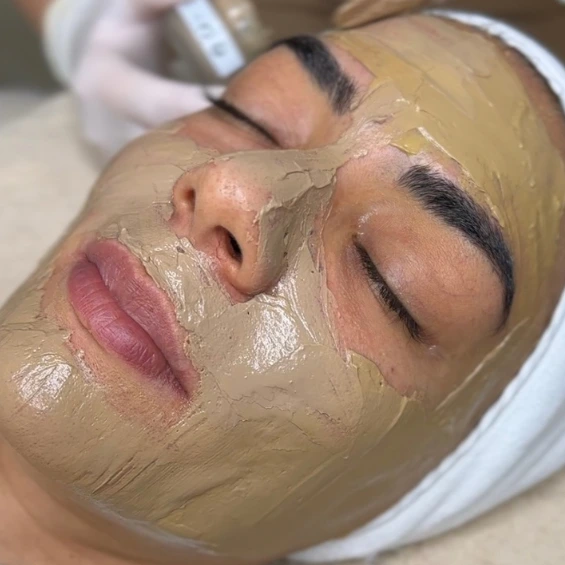
Pigmentation is often managed with laser treatment, chemical peels or both, depending on what your skin shows at the consultation. A laser sends pulses of light into the pigment and breaks it into smaller pieces that the body clears away. Because the laser targets pigment, the surrounding healthy skin is largely left alone. Peels work from the surface down, lifting away the top layers so fresher, more even skin can come through.

Both methods are non-invasive, with no cuts or stitches, though skin often shows mild redness or flaking in the days post-treatment. If you’ve read about IPL for dark spots, the clinic’s IPL photo rejuvenation uses Alma Harmony XL technology. Your practitioner can tell you whether it would suit your skin.

Lasers and peels behave differently on different skin types, which is why the settings and strength have to suit the person. Personalised treatment plans make sense for this reason, with each step matched to your skin. A setting that’s too strong can trigger fresh pigment rather than reduce it.

Pigmentation removal is gradual, and the marks rarely clear in one visit. The number of sessions varies with the amount of pigment, its depth and how your skin responds, so a course is usually recommended. Spacing sessions out gives the skin time to recover and shed the broken-up pigment. You can ask about the sessions required and the cost at your consultation, so you know the whole plan before you start.

Founder Roxana Diaconu built the clinic around hour-long consultations and always following up with clients. Those check-ins help with pigmentation, because your skin can react between sessions to a week in the sun or a change in hormones. The results of the treatment build gradually, so it’s worth judging them over the whole course rather than after one visit.

Benefits of Hyperpigmentation Treatment

Fades dark spots gradually

Improves uneven skin tone

Targets pigmentation at the source

Safe for face and body

Minimal impact on healthy skin

Supports long-term clarity

Enhances natural skin brightness

Reduces post-acne marks

Procedure at a glance

Is it painful?

No

Is there any downtime?

Little to none.

How many sessions needed?

Typically 3–6 sessions, depending on pigmentation depth.

When can I see the result?

Visible improvement often starts after the first few weeks.

How long does the procedure take?

Sessions usually last 20–45 minutes.

Book Your Appointment

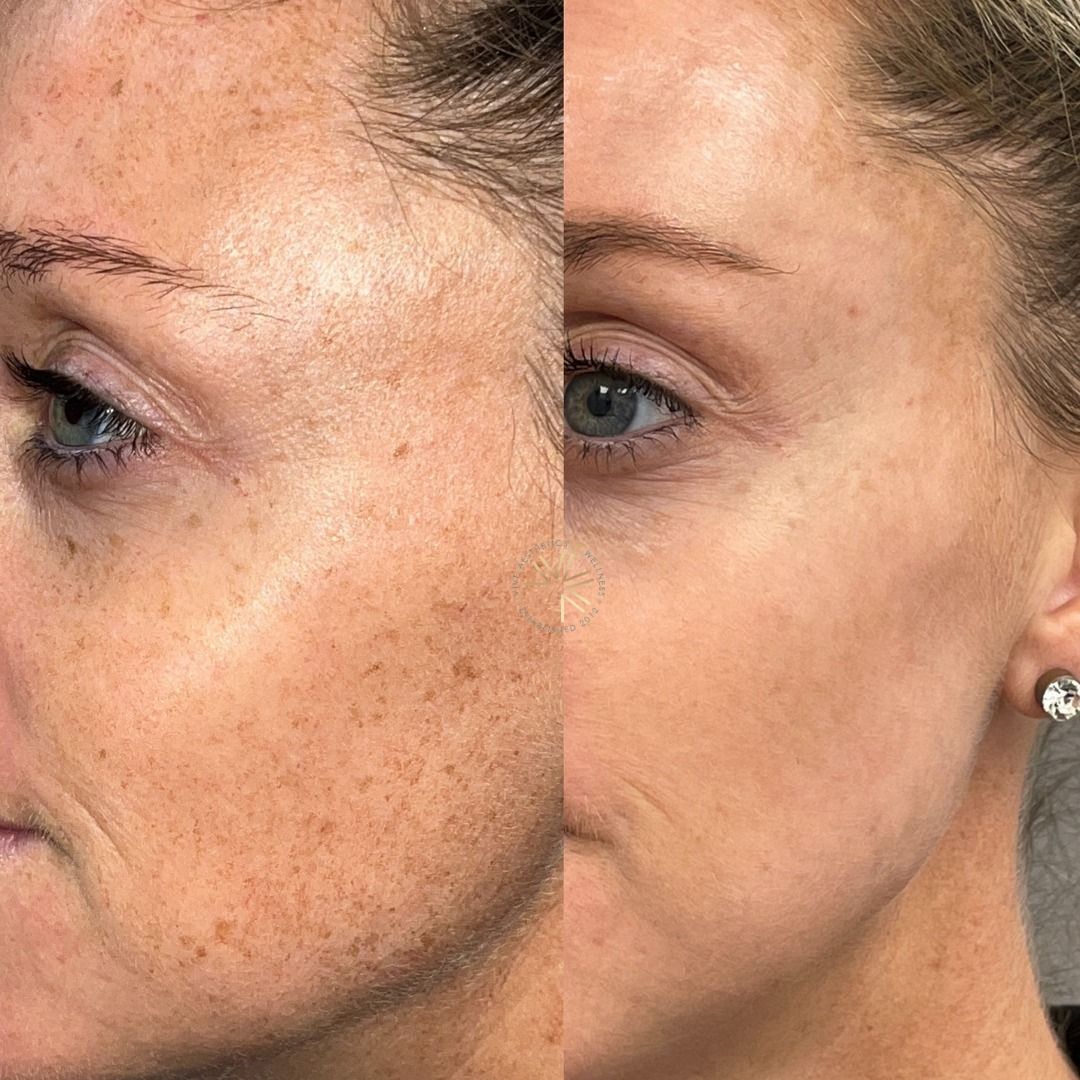
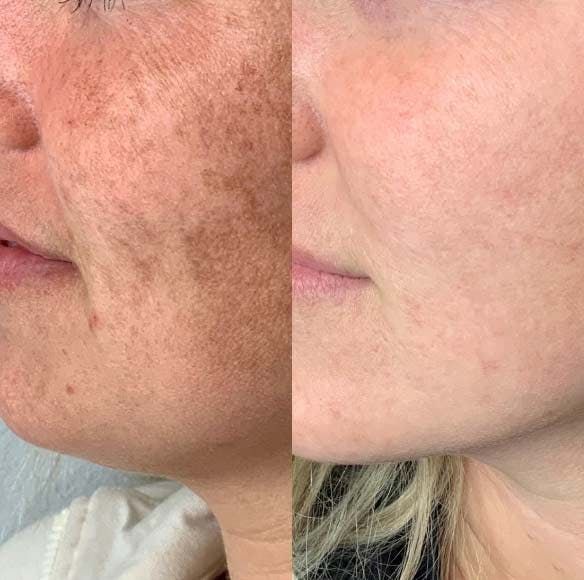
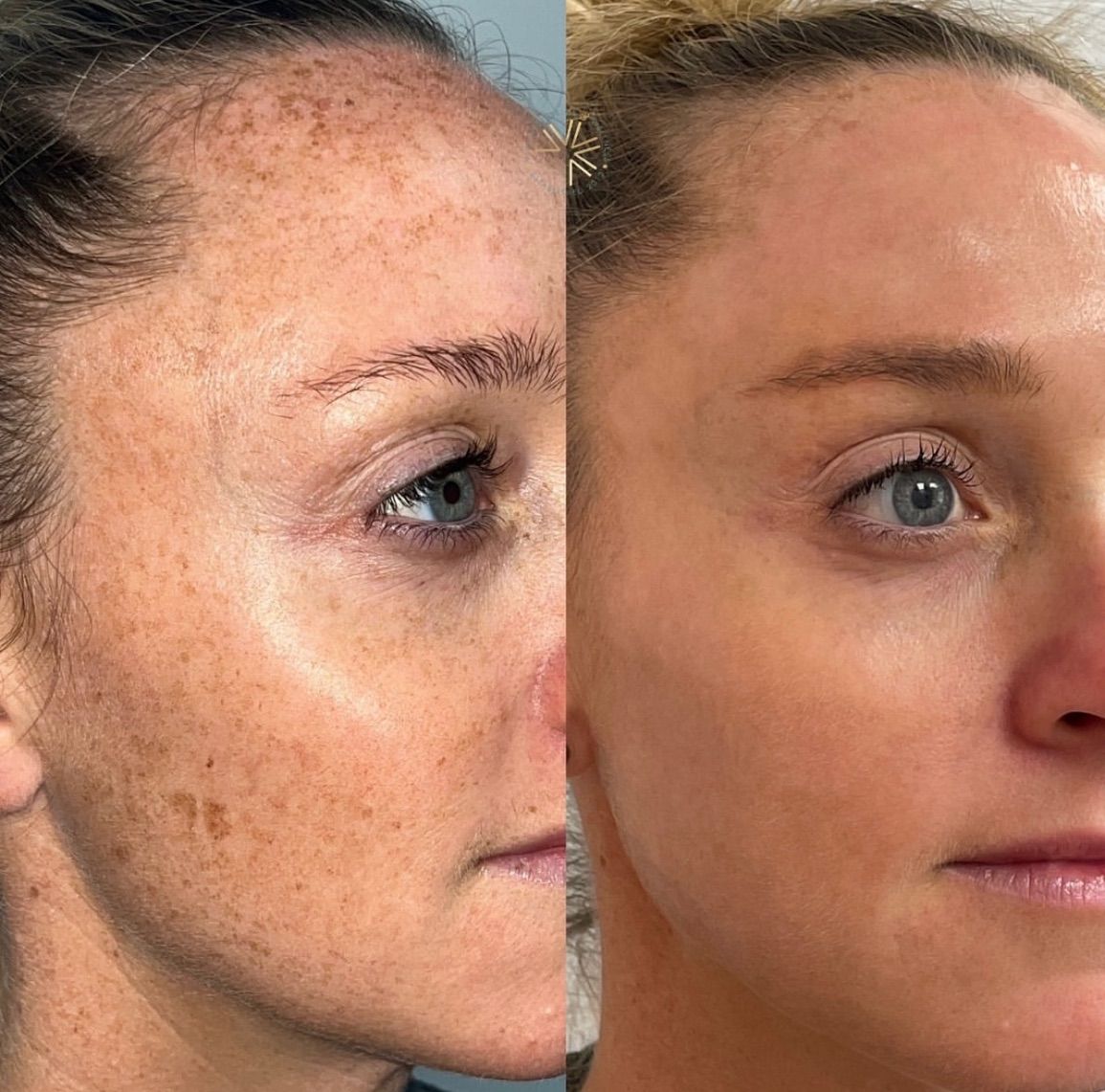
Before & After Gallery

How to Treat Hyperpigmentation Effectively

What Areas Can Be Treated?

Hyperpigmentation doesn’t affect the skin evenly, and it rarely limits itself to one area. Skin pigmentation treatment can be used on exposed and less visible areas alike, wherever dark spots or uneven tone appear. Where the marks sit often hints at what caused them, so the location helps determine the plan. The face is where most people start, because it’s exposed to the sun every day. Sun spots tend to collect on the cheeks, nose and forehead, where sunlight hits first. Melasma often forms a mirrored, blotchy pattern across both cheeks or above the upper lip instead. Marks left by old blemishes are common along the jawline and chin. Treatment for pigmentation isn’t limited to the face, because the body gets plenty of sun exposure as well. The skin on the neck and chest darkens easily, as it’s often missed when applying sunscreen. The backs of the hands show sun damage early, from time spent driving and outdoors. Shoulders and the upper back pick up spots too, especially if you’ve had sunburns in the past. Some darker areas have little to do with sun damage. The underarms and inner thighs can darken through friction, shaving or hormones, and the skin there is thinner and more sensitive. These areas often need lower settings or a gentler peel to avoid irritation. Wherever it is, a spot that grows, bleeds or looks unlike the others should be checked by a dermatologist first. If you’re unsure whether an area can be treated, raise it at your appointment and your practitioner can look at it with you. The clinic is at 825 Al Wasl Rd, Al Safa 2, Dubai, UAE.

Face

The most common area for hyperpigmentation treatment. Targets sun spots, melasma, acne marks, and uneven tone across cheeks, forehead, nose, and jawline without damaging sensitive skin.

Neck

Pigmentation on the neck often develops due to sun exposure and inconsistent skincare. Laser treatment for pigmentation helps restore uniform tone while maintaining skin texture.

Hands

Hands show sun damage faster than most areas. Skin pigmentation treatment reduces age spots and dark patches, helping hands look clearer and more even.

Décolletage

This area is prone to sun-induced pigmentation. Treatment helps fade discoloration while improving overall skin brightness.

Body Areas

Selected body areas with pigmentation caused by friction, inflammation, or previous skin trauma can be treated safely with adjusted laser settings.

Who Is an Ideal Candidate?

Hyperpigmentation treatment is suitable for individuals dealing with uneven skin tone, dark patches or lingering marks that don’t fade with topical products alone. If you’ve used brightening creams for a while and the marks haven’t shifted, a clinic treatment is the next thing to talk about. Most pigmentation issues are easier to treat once the cause is clear. All types of skin can develop hyperpigmentation, and treatment can suit most skin types with the right approach. Dark skin tones produce melanin more readily, so they carry a higher risk of reacting to heat or strong acids with new pigment. That doesn’t rule you out if you have dark skin. It means the settings and peel strength need extra care, and a patch test is a sensible first step. Timing matters too, and some people are better off waiting before they start. Pregnancy often triggers melasma, but many treatments are put off until after the baby arrives and hormones settle. Certain medications make skin more sensitive to light and heat, so tell your doctor about anything you’re taking. An active tan is another reason to wait, since tanned skin is more likely to react. Some skin conditions, such as eczema or rosacea, need to be settled before any laser or peel. White patches, where the skin has lost its pigment, belong to a different group of pigmentation disorders. They need a diagnosis from a dermatologist rather than a treatment for dark spots. The team at Roxana Aesthetics includes specialist dermatologist Dr Natallia Kaliashuk. It helps to go in with realistic goals. Treatment can fade marks and even out your skin tone, but deeper pigment and melasma may lighten rather than clear completely. Progress differs from person to person, so compare your skin with how it looked at the start. Your practitioner can tell you what result is likely for your skin at the consultation. The people who get the most from treatment are ready to protect their skin afterwards. Results aren’t permanent if the trigger keeps going, because your skin can produce melanin again whenever it’s provoked. To maintain the results and prevent new marks, wear sunscreen daily, even indoors, since some UV rays pass through windows. This matters for all skin types, and a gentle skincare routine helps the skin settle between sessions. Choose a broad-spectrum sunscreen with an SPF high enough for the strong local sun, and reapply it when you’re outside for long. Wearing a wide-brimmed hat and loose clothing that covers the skin helps too. Your practitioner can tell you which skin care products to pause around each session, since some actives can irritate treated skin. Picking at flaking skin can leave new marks, so let it come away on its own as it heals. One client put it this way: “The clinic is clean, modern, and very well managed. I highly recommend Roxana Aesthetic Clinic for anyone looking for excellent service and outstanding customer care.” The clinic is at 825 Al Wasl Rd, Al Safa 2, Dubai, UAE. Book an appointment and you’ll have time to go through your skin and your goals in full.

You May Be an Ideal Candidate If You:

Notice dark spots or uneven tone

Have sun-related pigmentation

Experience post-acne marks

Want non-invasive correction

Prefer gradual, natural results

This Treatment May Not Be Suitable If You:

Have active skin infections

Are pregnant (depending on pigmentation type)

Have uncontrolled skin conditions

Recently had aggressive chemical treatments

Treatment Process at Roxana Aesthetics Clinic

Skin Analysis & Pigmentation Assessment

Every hyperpigmentation treatment in Dubai begins with a detailed skin evaluation. Pigmentation type, depth, and triggers are assessed to determine whether the concern involves sun damage, melasma, or post-inflammatory marks. This step ensures the hyperpigmentation face treatment is planned safely and accurately.

Personalized Treatment Planning

Based on the assessment, a tailored hyperpigmentation treatment plan is created. Laser settings, session intervals, and treatment intensity are selected according to skin tone and sensitivity, helping position the approach as the best treatment for hyperpigmentation without unnecessary irritation.

Targeted Hyperpigmentation Face Treatment

The treatment session focuses on breaking down excess pigment beneath the skin using controlled technology. This hyperpigmentation face treatment targets dark spots precisely while protecting surrounding tissue, allowing gradual lightening and improved tone.

Skin Recovery & Pigment Clearance

Following each session, the skin enters a natural renewal phase. Pigment particles break down and are cleared over time, which is why hyperpigmentation treatment results appear progressively rather than overnight. Proper recovery supports even skin tone and reduces the risk of rebound pigmentation.

Maintenance & Long-Term Results Support

To maintain results from hyperpigmentation treatment Dubai protocols, follow-up sessions and preventative care guidance may be recommended. Sun protection and skin-supportive routines help extend results and protect against future pigmentation.

Roxana Aesthetics Clinic
What to Expect and When

Results Timeline & Longevity

Week 1–2
Mild redness may appear, followed by subtle darkening of spots as pigment begins to break down.
Week 3–4
Pigmented areas start to fade. Skin tone looks more even in natural lighting.
After Multiple Sessions
Noticeable reduction in pigmentation depth and spread. Texture and clarity continue to improve.
Long-Term
Results can last for months or years with sun protection and maintenance treatments. Pigmentation triggers still matter, so prevention remains part of the plan.
User-Speak
Consultation

Book a personalised 30-minute consultation for pigmentation treatment in Dubai to address your skin concerns and find the best solution for you.

Document-Add
Treatment Plan

Get a personalized treatment plan designed to target and reduce your specific pigmentation issues

Magic-Stick
Results

Enjoy more even skin tone and glowing complexion with our advanced pigmentation treatments

SATISFIED CLIENTS

TESTIMONIALS FROM OUR BELOVED CLIENTS
AboutPhoto
FAQs
Common Questions About Pigmentation Treatment
How can I maintain my results?

We recommend using sunscreen daily, avoiding excessive sun exposure, and following a tailored skincare routine to maintain and enhance your results.


Is the treatment painful?

Most treatments are well-tolerated with minimal discomfort. We use techniques to ensure your comfort throughout the procedure.

How many treatments will I need?

The number of treatments varies based on the severity of pigmentation, with most clients seeing significant improvement after a series of sessions.

What causes pigmentation issues?

Pigmentation can be caused by factors such as sun exposure, hormonal changes, aging, and inflammation.

How does laser pigmentation treatment work?

Laser treatments target melanin in the skin, breaking it down so the body can naturally eliminate it. This reduces dark spots, sun damage, and uneven tone effectively.


How many sessions are required?

The number of sessions depends on the severity and type of pigmentation. Most patients need 3–6 sessions spaced a few weeks apart for noticeable results.


Is there downtime after pigmentation treatment?

Downtime varies by procedure. Non-invasive treatments like laser therapy or chemical peels may cause temporary redness, peeling, or mild irritation, while more intensive procedures may require a few days of recovery.


Can pigmentation return after treatment?

Pigmentation can recur due to sun exposure or hormonal changes. Using sunscreen daily and following skincare advice from your specialist helps maintain results.


Can pigmentation treatment be done on all skin types?

Yes, but treatment plans differ for lighter or darker skin tones to prevent complications like hyperpigmentation or irritation. Clinics in Dubai customize treatment accordingly.


Medically reviewed by

Dr. Natallia Kaliashuk

Dermatologist · DHA licence 69700032

This page is general information and does not replace a consultation.

Hyperpigmentation Treatment

Prices start from

AED 1050

VAT included

Prices start from AED 1050 and may vary depending on the personalised treatment plan recommended by our aesthetic doctors.

Step into a world of relaxation and rejuvenation

Your health is our priority. Schedule your appointment today to connect with our trusted specialists and receive the care you need.

Partnered with:

Roxana-Aesthetics-Clinic-Partnerships.png
SCHEDULE YOUR PRESENCE
Make an Appointment