
If your usual moisturiser suddenly seems to disappear by lunchtime, makeup sits differently, or the lower face looks softer than it did a year ago, you are not imagining things. Menopause can change the skin surprisingly quickly. For some women, the shift starts during perimenopause; for others, it becomes more noticeable after periods have stopped.
The important thing is that “menopause skin” is not one concern. Dryness, laxity and facial volume loss happen at different levels of the face, so they do not respond to the same treatment. A hydrating facial cannot replace lost cheek support, just as filler is not the answer to a weakened skin barrier.
The most effective menopause skin treatments in Dubai begin with a proper assessment and a clear question: what has actually changed? Here is how to think about the options without chasing every new procedure.
Why does skin change during menopause?
DermNet explains that oestrogen helps maintain skin hydration, ceramides, sebum and hyaluronic acid. As levels fall, skin may become drier, thinner and more easily irritated. At the same time, reduced collagen and elastin can make fine lines, crepiness and sagging more visible.
The pace can feel abrupt. The American Academy of Dermatology notes that women may lose around 30% of their skin’s collagen during the first five years of menopause, followed by a more gradual decline. Sun exposure, genetics, smoking, stress, weight change and skincare habits also influence what you see, so menopause is only part of the picture.
Changes in the deeper facial fat compartments and bone continue with age as well. Together, these shifts can flatten the cheeks, deepen folds and reduce jawline definition. That is why a good consultation looks at skin quality and facial structure separately.
Menopause skin dryness: rebuild comfort before doing more
Dry, tight or newly reactive skin usually needs a barrier-first approach. Before booking an energy-based procedure, simplify your routine: use a gentle cleanser, a fragrance-free moisturiser rich in ceramides, and broad-spectrum SPF 30 or higher every morning. Hot water, scrubs and frequent strong acids may make an already fragile barrier feel worse.
In-clinic care can complement that foundation. Skin boosters in Dubai use micro-injections of hydrating ingredients, commonly hyaluronic acid, to improve moisture, smoothness and overall skin quality. They are not designed to sculpt the face or create the projection associated with filler. This distinction matters. Skin boosters may make dehydrated, crepey skin look fresher, but they will not replace meaningful cheek volume.
At Roxana Aesthetics, options include skin booster treatments such as Profhilo, Restylane Skinboosters and Jalupro, selected according to the skin’s condition and the patient’s goals. Profhilo is used for hydration and bio-remodelling rather than reshaping facial features.
Some women benefit from a gentle facial between injectable or device appointments. The aim should be hydration and barrier support, not aggressive exfoliation for its own sake. If dryness comes with persistent itching, cracking, a rash or sudden sensitivity, see a dermatologist first; eczema, rosacea and other skin conditions can emerge or flare around menopause.
What helps laxity and crepey texture?
Laxity is a structural concern. It may show up as fine creases on the cheeks, softness under the chin, jowling or a neck that no longer feels as firm. Moisturiser can reduce the appearance of surface dryness, but it cannot tighten deeper tissue.
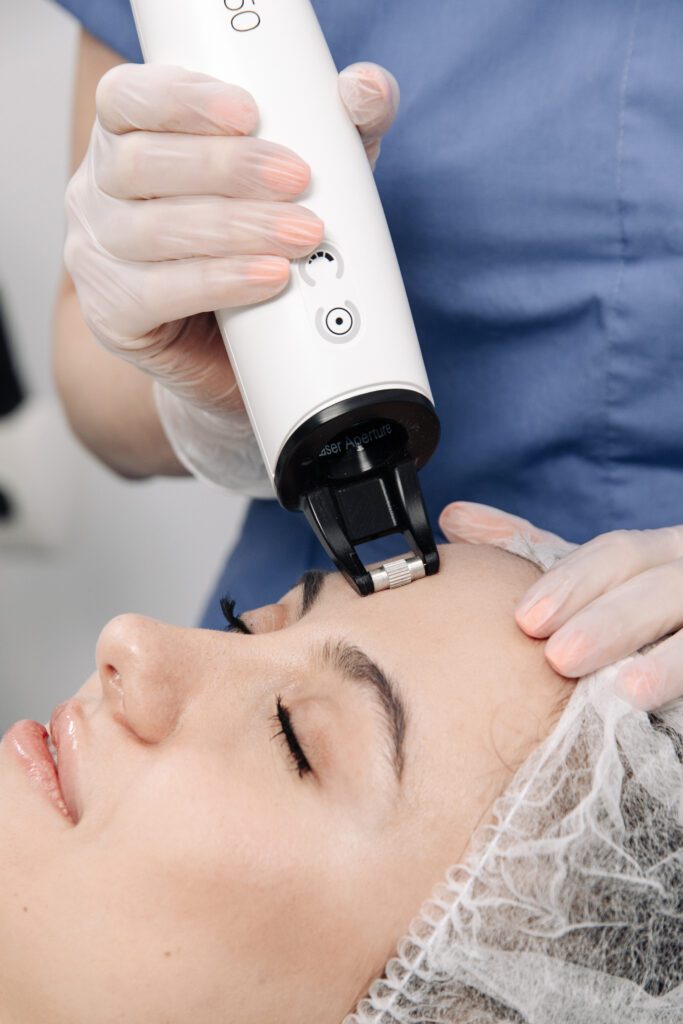
A collagen-stimulating treatment may be considered when the main goal is firmer, smoother skin rather than added volume. Morpheus8 Pro combines microneedling with radiofrequency energy. The controlled treatment encourages a repair response and collagen remodelling over time. It can be used on areas including the face, lower face, jawline and neck, with depth and settings tailored to the individual.
This type of skin tightening treatment in Dubai tends to suit mild to moderate laxity and textural change. Results are gradual, not instant, and a course may be advised. Temporary redness, swelling, sensitivity or pinpoint crusting can occur, so treatment timing and aftercare matter—especially when menopausal skin is already dry or reactive.
No non-surgical device reproduces a surgical facelift. That does not make it ineffective; it simply means the goal must be realistic. A subtle improvement in firmness and jawline definition can be worthwhile when it matches what the patient actually wants.
Treating facial volume loss without looking overfilled
Volume loss is different from loose skin. Clues include flatter cheeks, hollowing at the temples or under-eyes, deeper nasolabial folds, and a face that looks tired even after a good night’s sleep. Skin boosters may improve the surface, but they do not provide the same structural support as dermal filler.
A conservative facial volume loss treatment may use hyaluronic acid dermal filler in carefully selected areas. Rather than filling every visible line, an experienced injector assesses where support has been lost. Restoring modest cheek structure, for example, can rebalance the mid-face and may soften nearby folds without chasing them directly.
Roxana Aesthetics offers dermal fillers in Dubai for areas including the cheeks, chin, jawline, under-eyes and nasolabial folds. For women whose change is concentrated through the mid-face, cheek fillers may be one part of a measured plan.
The operative word is measured. Menopausal faces do not need to be “replaced” with an earlier version. Thoughtful treatment respects bone structure, expression and natural asymmetry. It may also be appropriate to do less than expected, review the settled result, and add only if genuinely needed.
Fillers have potential risks as well as benefits. Bruising and swelling are common short-term effects; rare vascular complications can be serious. Treatment should therefore be performed by an appropriately licensed medical professional who understands facial anatomy, uses suitable products and discusses emergency protocols as part of informed consent.
Can these treatments be combined?
Often, yes—but not necessarily on the same day. A layered plan might begin by calming dryness and repairing the barrier, then introduce collagen stimulation for laxity, and finally consider small amounts of filler where structural volume has been lost. Another patient may need only home care and a skin booster. There is no compulsory “menopause package.”
Sequencing matters because each procedure has its own recovery window and biological timeline. It also makes results easier to judge. When several treatments are performed at once, it can be hard to tell what helped, what was unnecessary and what caused a reaction.
During a consultation, share your medical history, medication and supplement use, allergies, previous procedures, tendency to bruise or pigment, and whether you experience cold sores. Mention hormone therapy, but remember that menopausal hormone therapy is a broader medical decision—not a cosmetic skin treatment—and should be discussed with the clinician managing your menopause care.
A simple home routine still carries much of the load
Clinic treatments work best alongside consistent daily care. In the morning, use a gentle cleanse if needed, moisturiser and broad-spectrum sunscreen. At night, cleanse without stripping the skin and apply a richer moisturiser. A retinoid or retinol may support collagen and texture, but introduce it slowly and seek professional advice if your skin is sensitive. Peptides can also be a useful, well-tolerated addition.
Do not underestimate comfort. If a product stings every day, using more of it is rarely the answer. Menopause skin dryness often responds better to fewer products used consistently than to a crowded routine of acids and actives.
Choosing the right menopause skin treatment in Dubai
Start with the feature that bothers you most. Is the skin uncomfortable and dehydrated? Does it feel loose? Has facial shape changed? The answer guides the treatment category—and sometimes the right recommendation is to repair the skin barrier before doing anything more advanced.
At Roxana Aesthetics Clinic, consultations are carried out with qualified, DHA-licensed medical professionals, and treatment plans can be adapted to skin quality, facial anatomy and personal preferences. The goal is not to erase menopause from your face. It is to help your skin feel comfortable, restore support where it has genuinely been lost, and achieve a result that still looks like you.
Book a personalised consultation to discuss which menopause skin treatments in Dubai fit your skin, health history, recovery time and expectations.