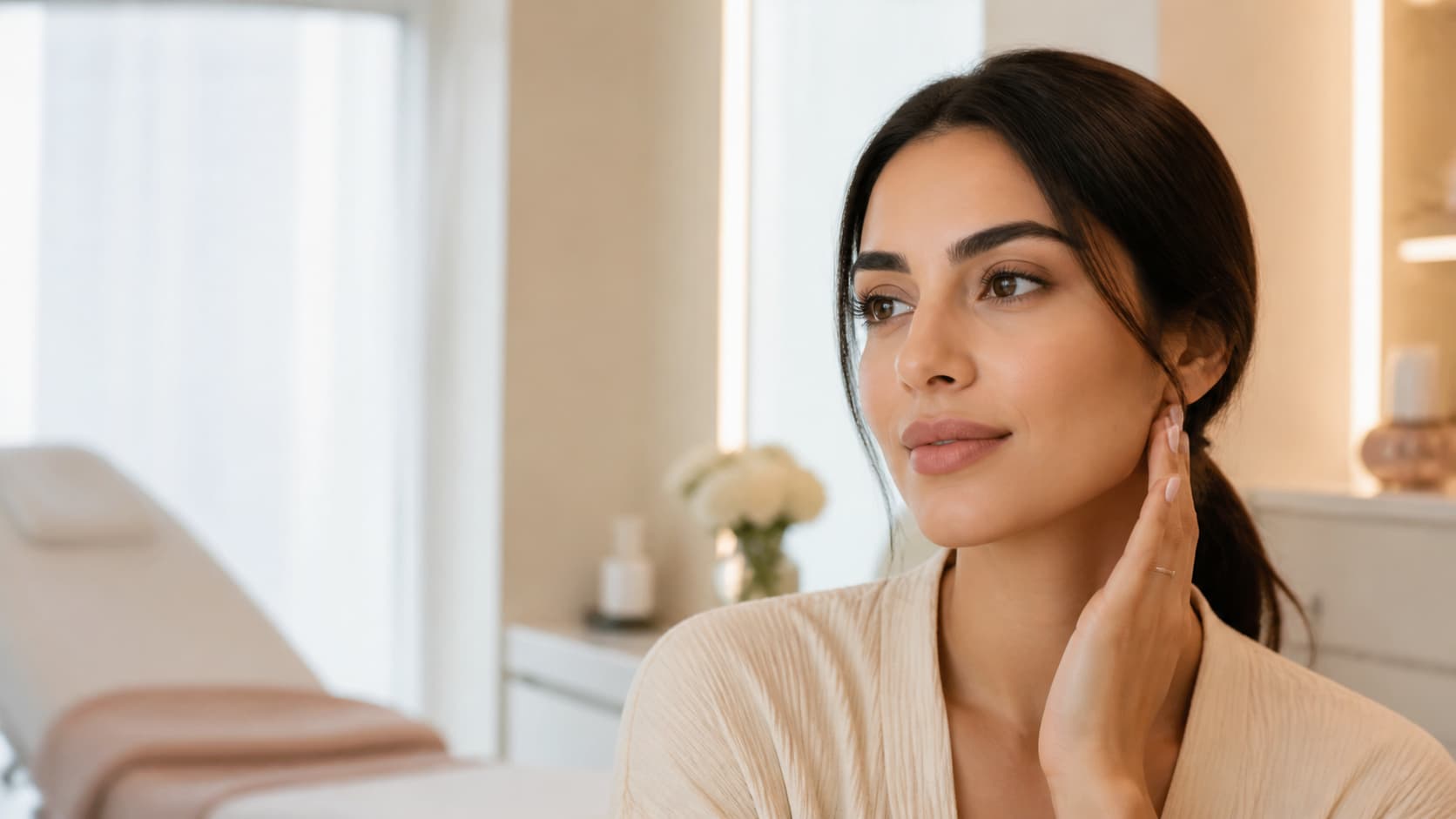
Look closely at your skin while your face is relaxed, then smile or raise your eyebrows. Do the lines appear mainly with movement, or can you still see a fine, crinkled texture at rest? That small distinction often tells us more than age alone.
It is also the simplest way to understand the Rejuran vs Botox question. Botox is usually the stronger choice for lines created by repeated muscle movement. Rejuran focuses on the quality of the skin itself, making it particularly relevant when skin looks thin, dry or crepey.
Neither treatment is universally “better”. They solve different problems, and some people benefit from a carefully timed combination.
Here is how to decide which conversation to have with your practitioner.
The short answer: Rejuran or Botox?
Choose Botox when a line deepens as you frown, squint or lift your brows. Think forehead lines, crow’s feet and the vertical lines between the eyebrows. Botox temporarily reduces the activity of selected muscles, so the skin above them folds less forcefully.
Consider Rejuran when the concern is less about one strong crease and more about overall skin condition: fine etched lines, reduced elasticity, a delicate under-eye texture or crepey-looking skin that remains visible when your face is still. Rejuran is a polynucleotide injectable used to support gradual skin renewal rather than freeze movement or add obvious volume.
If you have both concerns, the answer may not be either/or. A conservative plan can use each treatment for the job it does best.
Why fine lines and crepey skin are not the same thing
“Fine lines” is a broad description. Dynamic lines are caused largely by expression. In the beginning, they disappear when the relevant muscle relaxes. Over time, repeated folding, sun exposure and changes in collagen can make them visible even when the face is resting.
Crepey skin behaves differently. It tends to look finely wrinkled, thin and slightly loose, rather like crepe paper. It may appear around the eyes, on the cheeks, neck or décolletage. Dehydration can make it look more obvious, but moisturiser alone cannot correct every change in the skin’s structure.
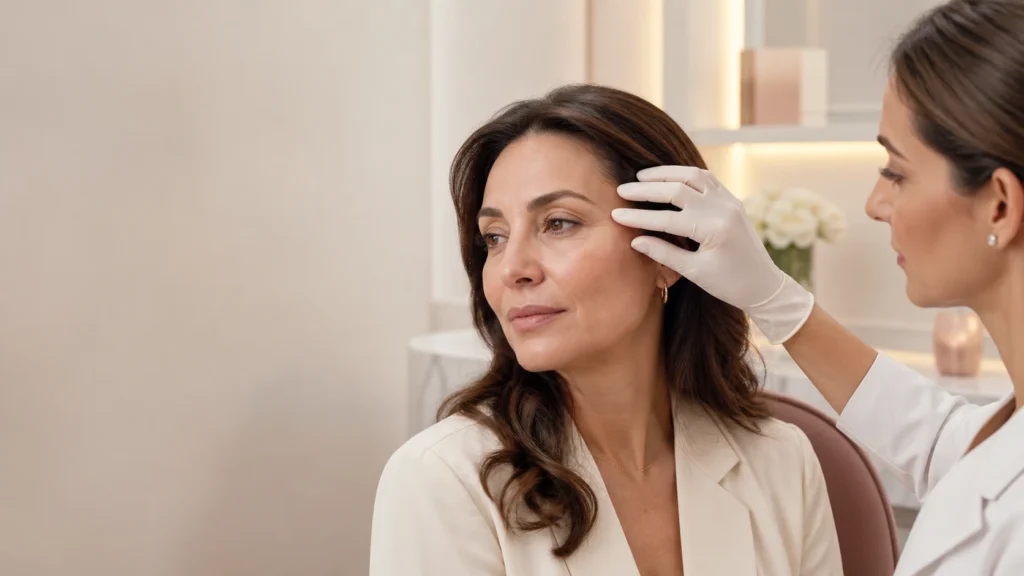
This is why a good consultation includes watching the face in motion and examining the skin at rest. Treating a texture problem as if it were purely muscular can produce a disappointing result. The reverse is also true.
How Botox treats expression lines
Botox in Dubai is a prescription injectable based on botulinum toxin type A. It temporarily reduces nerve signals to specifically selected muscles. When those muscles contract less strongly, the skin above them creases less and movement-related lines soften.
Research supports botulinum toxin type A for facial wrinkles, particularly in areas such as the glabella, forehead and crow’s feet. However, outcomes and risks depend on the product, dose, facial anatomy and injection technique.
Botox does not fill a hollow area or directly replace lost collagen. That distinction matters when the main concern is crepey skin rather than facial expression.
At Roxana Aesthetics Clinic, the published treatment timeline notes that early changes may appear within a few days, with the result generally settled by days 10 to 14. Effects are temporary, and movement usually returns gradually over the following months.
For someone bothered by a frown line that appears in every photograph, Botox for fine lines may provide a more direct result than a skin-repair injectable. Thoughtful dosing is essential. The aim should be to soften distracting movement while preserving an expression that still feels like yours.
How Rejuran approaches crepey skin
Rejuran treatment in Dubai takes a different route. Rejuran contains purified, salmon-derived polynucleotides. These injectable molecules are used to support the skin’s repair environment and encourage gradual improvements in qualities such as texture, elasticity and thickness.
Rather than relaxing a muscle, Rejuran is placed within targeted layers of the skin. This makes it an interesting crepey skin treatment, particularly for delicate areas where the goal is smoother, more resilient-looking skin without creating a filled or frozen appearance.
The change is progressive. You should not expect a forehead line to switch off within several days, as it might after Botox. Small injection bumps, redness, tenderness, swelling or bruising can occur initially. Roxana’s treatment page notes that a course may involve several sessions, with the number and spacing personalised after assessment.
Clinical research into polynucleotide injectables is promising, with studies reporting improvements in wrinkles, texture and elasticity. Still, the evidence base is smaller and less mature than the literature for botulinum toxin. A treatment can be useful without being presented as a miracle.
Rejuran vs Botox at a glance
| Question | Rejuran | Botox |
|---|---|---|
| Main target | Skin quality, fine texture and crepiness | Lines driven by repeated muscle movement |
| How it works | Polynucleotides support gradual skin renewal | Temporarily reduces activity in selected muscles |
| Typical areas discussed | Under-eyes, cheeks, face and other thin-textured areas | Forehead, frown lines and crow’s feet |
| Result style | Progressive improvement in texture and resilience | Earlier softening of expression lines |
| Volume or movement | Does not aim to create obvious volume or stop expression | Changes muscle movement but does not add volume |
| Treatment pattern | Often planned as a course | Usually one appointment per treatment cycle |
| Common temporary effects | Bumps, redness, swelling, tenderness or bruising | Redness, tenderness, headache or bruising; unwanted muscle effects are also possible |
These are general differences, not a personal treatment prescription. Product choice, technique and suitability must be decided by a qualified medical practitioner.
Which treatment is better for the under-eye area?
The eye area is where the comparison becomes especially nuanced. Crow’s feet that fan out when you smile are dynamic lines, so Botox may be appropriate. Fine crinkles present at rest, poor elasticity and thin-looking under-eye skin point more towards a skin-quality treatment such as Rejuran.
Sometimes both patterns exist. The tissue around the eyes is delicate, and over-relaxing certain muscles can affect expression. Rejuran injections can also cause short-term bumps or swelling. Anatomy, eye health, previous procedures and tolerance for downtime all need to be considered.
The most useful question is not, “Which treatment is trending?” It is, “What is causing the line I want to change?”
Can Rejuran and Botox be combined?
They may be combined when a medical practitioner considers both treatments suitable. Botox can address the muscular component while Rejuran supports overall skin quality. Because their mechanisms differ, one treatment does not simply duplicate the other.
Sequencing should be personal. Your practitioner may separate the appointments so the skin can settle and each response can be assessed clearly.
Be open about recent injectables, dental work, medication, supplements, allergies and upcoming travel or events. If you are pregnant or breastfeeding, have an active infection, a relevant allergy, a neuromuscular condition or a complex medical history, this must be discussed before any injectable treatment.
What if crepiness is accompanied by laxity or dehydration?
Crepey skin is not always a one-treatment problem. If dehydration is dominant, Roxana’s skin booster treatments may also be considered to improve hydration, elasticity and smoothness.
Where uneven texture and mild laxity need broader collagen remodelling, Morpheus8 Pro or SkinPen microneedling may be more relevant parts of a skin rejuvenation Dubai plan.
That does not mean stacking every available service. It means matching each layer of the concern with an appropriate option. Daily broad-spectrum sunscreen and consistent moisturising still matter, especially in Dubai’s strong sun and air-conditioned environments.
Rejuran vs Botox: the final verdict
For movement-related fine lines, Botox generally has the advantage. For crepey texture and broader skin-quality concerns, Rejuran is often the more relevant option.
When dynamic lines sit over thin, weathered skin, a carefully planned combination may create a more balanced result than either treatment alone.
The best choice is therefore not based on age or a social-media trend. It comes from identifying whether your concern begins in the muscle, the skin or both.
At Roxana Aesthetics Clinic in Al Safa 2, Dubai, a consultation can assess your facial movement, skin thickness, elasticity, medical history and tolerance for downtime before a treatment plan is recommended.
Bring clear examples of what bothers you and describe how much movement you want to retain. That honest conversation is the most reliable route to a result that looks refreshed, not overdone.
Frequently asked questions
Is Rejuran the same as Botox?
No. Rejuran is a polynucleotide injectable intended to support skin quality and renewal. Botox is a botulinum toxin treatment that temporarily reduces selected muscle movement. They have different mechanisms and treatment goals.
Which lasts longer, Rejuran or Botox?
There is no simple like-for-like answer. Botox follows a temporary treatment cycle as muscle activity gradually returns. Rejuran is often delivered as a course, and the visibility and persistence of skin-quality improvements vary according to skin condition, treatment protocol and lifestyle.
Does Rejuran add volume like filler?
Rejuran is not chosen to reshape facial contours in the way a conventional dermal filler might. Its purpose is gradual improvement in skin quality. If volume loss is the main concern, ask for a separate facial assessment.
Is either treatment permanent?
No. Ageing, facial movement and environmental exposure continue. Maintenance should be discussed after your response to the first Botox treatment or Rejuran course has been reviewed.