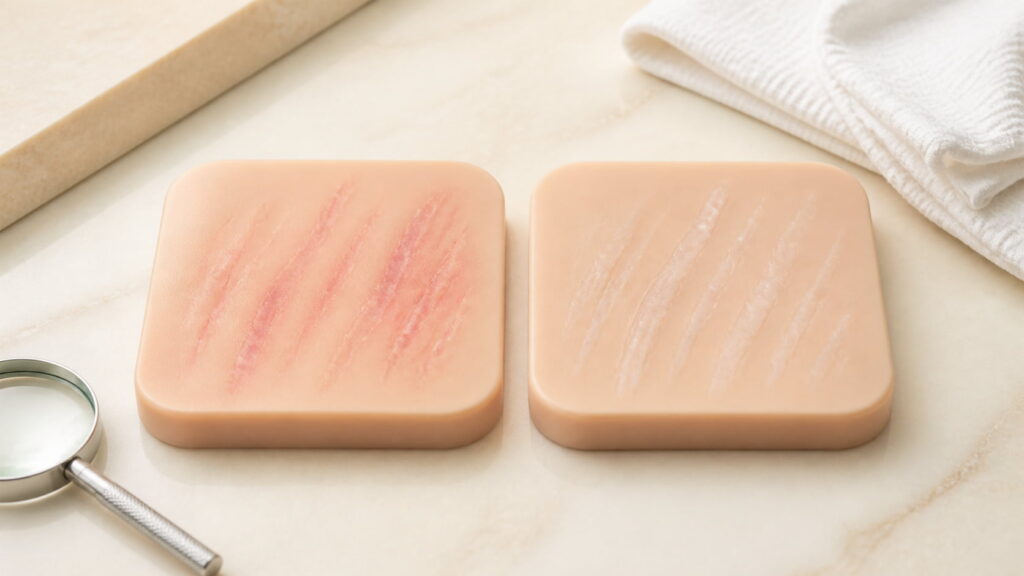
If you have ever noticed a new stretch mark looking pink, red or purple while an older one appears pale and silvery, you are seeing two stages of the same skin change. The difference is not simply cosmetic. Colour offers a useful clue about what is happening beneath the skin and how readily the mark may respond to treatment.
So, when comparing red vs white stretch marks, which are easier to remove? In most cases, newer red marks respond more readily because the tissue is still in an active, vascular stage. White marks are older and more settled, with established changes to collagen, elastin and skin texture. They can still be improved, but the process usually requires more patience and a treatment plan focused on remodelling the skin.
It is also worth putting the word “remove” into context. Stretch marks are a type of scar. Professional treatment can make them less noticeable, but no responsible practitioner should promise to erase them completely.
What causes stretch marks?
Stretch marks, medically known as striae distensae, develop when skin stretches or contracts faster than its supportive structure can comfortably adapt. Collagen and elastin fibres in the dermis become disrupted as the skin heals. Genetics and hormonal changes also influence who develops them, which is why two people going through similar body changes can have very different skin.
Common triggers include pregnancy, puberty, rapid weight gain or loss, and fast muscle growth. Certain health conditions and prolonged corticosteroid use can also be associated with stretch marks. They most often appear on the abdomen, hips, thighs, breasts, upper arms and buttocks.
What are red stretch marks?
Red stretch marks are the earlier stage, known as striae rubrae. Depending on your natural skin tone, they may look pink, red, purple, reddish-brown or dark brown rather than literally red. They can be slightly raised at first and may sometimes itch.
At this stage, there is more visible vascular activity and inflammation within the tissue. That is one reason a red stretch marks treatment may produce a clearer response: a clinician can address the colour and early structural changes before the mark matures.
Colour alone cannot reveal the exact age of a mark, however. Skin tone, hormones and individual healing all affect its appearance. A professional assessment is more useful than trying to date it in the mirror.
What are white stretch marks?
As stretch marks mature, they tend to fade and become white, silver or lighter than the surrounding skin. These are called striae albae. They often feel flat or slightly indented because the tissue has become thinner and less supported.
White marks have less vascular activity than red ones. At this point, the main concern is no longer redness; it is the established difference in texture and pigmentation. A white stretch marks treatment therefore focuses on encouraging collagen remodelling and gradually improving the skin’s surface. Mature marks are more resistant, but that does not make them untreatable.
Why are red stretch marks easier to treat?
The short answer is timing. Red stretch marks are still biologically active. Their blood vessels create the pink, red or purple tone, and the tissue has not completed its transition into a pale, mature scar. Treatment can work with this activity by reducing visible colour and supporting repair.
White stretch marks present a different challenge. As they mature, vascularity decreases, dermal thinning becomes established and the colour contrast may be harder to correct. Treatment shifts from calming colour to rebuilding texture.
Clinical literature generally finds that early striae rubrae respond better than older striae albae. The American Academy of Dermatology also notes that early marks tend to respond better to topical treatment than mature ones. Still, “easier” does not mean instant. Even new marks need time for collagen renewal.
Can red or white stretch marks be completely removed?
Usually, no. Stretch marks are permanent changes within the dermis, although their appearance can be softened. Results vary with the age, colour, width and depth of the marks, as well as skin tone, treatment choice and the body’s healing response.
It helps to define success before starting. For one person, that may mean reducing a red or purple tone. For another, it may mean smoothing deep white lines so they catch less light. Good stretch mark removal in Dubai should begin with that honest conversation, not a promise of flawless skin.
Which professional treatments may help?
There is no single best device for every stretch mark. A recent systematic review of 69 studies found encouraging results for several laser, energy-based and combination approaches, but concluded that the evidence does not support one universal treatment. The right option depends on the stage of the marks, their depth and the person’s skin.
Fractional laser resurfacing
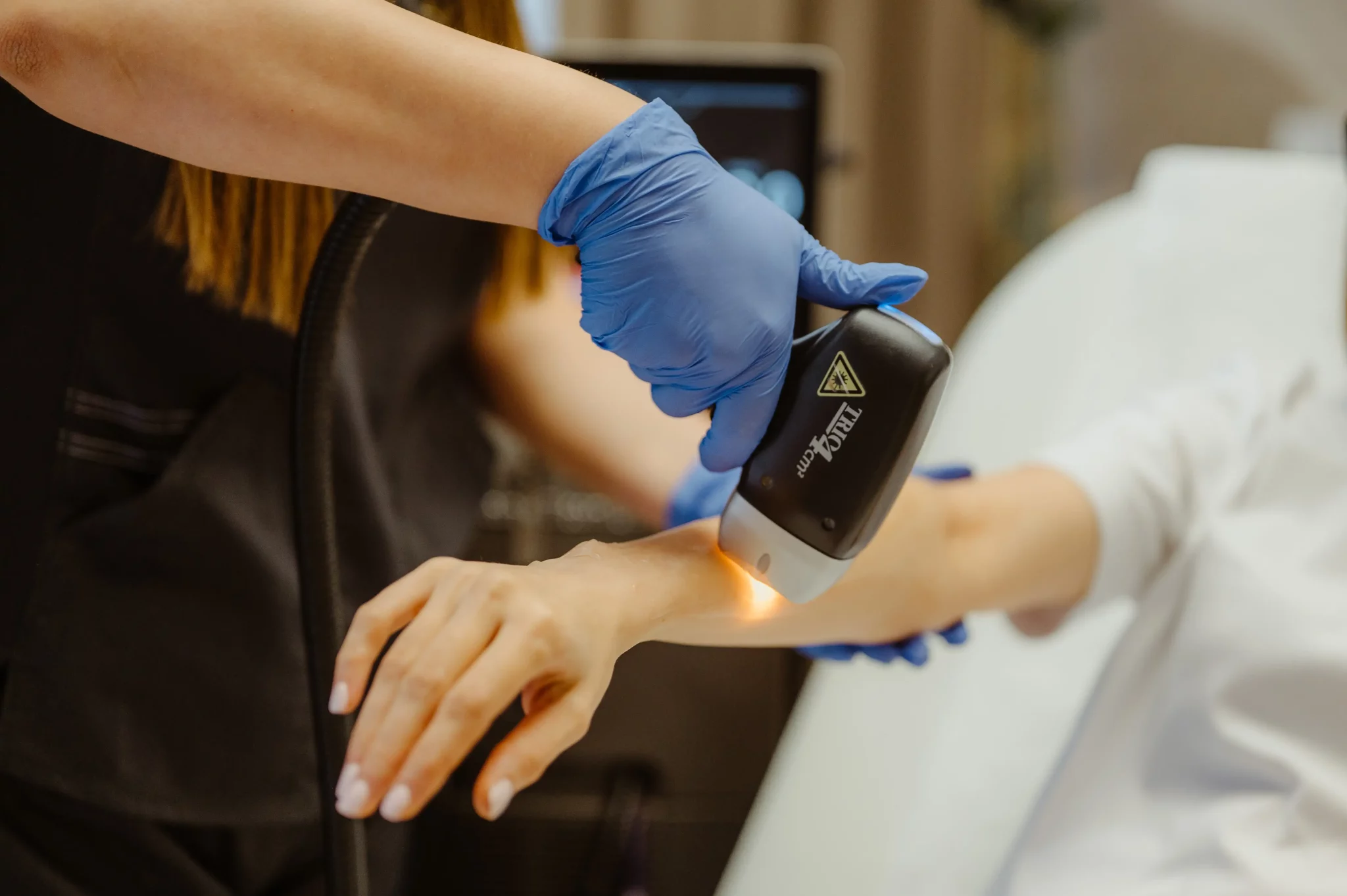
Fractional technology creates controlled microscopic treatment zones while leaving nearby skin intact. This prompts a repair response and new collagen formation over time. At Roxana Aesthetics Clinic, Frax Pro skin resurfacing is used for concerns including stretch marks and uneven texture, with settings selected after assessment.
A laser treatment for stretch marks may be considered for red or white marks, but the objective can differ. With early marks, colour may be addressed alongside texture. With mature marks, collagen remodelling is usually the main goal. Skin tone is an important part of device and setting selection because overly aggressive treatment can cause unwanted pigment changes.
Radiofrequency microneedling
Radiofrequency microneedling combines controlled microchannels with heat delivered below the skin’s surface. The aim is to stimulate collagen and support smoother-looking tissue. Roxana’s Morpheus8 Pro treatment is one option that may be assessed for stretch marks, particularly when texture is the main concern.
This approach can be relevant to white stretch marks treatment because established marks often need structural remodelling rather than colour correction alone. It is not automatically suitable for every person or body area, so depth and energy should be professionally selected.
A personalised or combined plan
Some people benefit from more than one approach. A clinician may sequence treatments to address redness, uneven texture and skin laxity instead of expecting a single session to do everything. Roxana’s dedicated stretch mark removal service is the most relevant place to explore an individual plan.
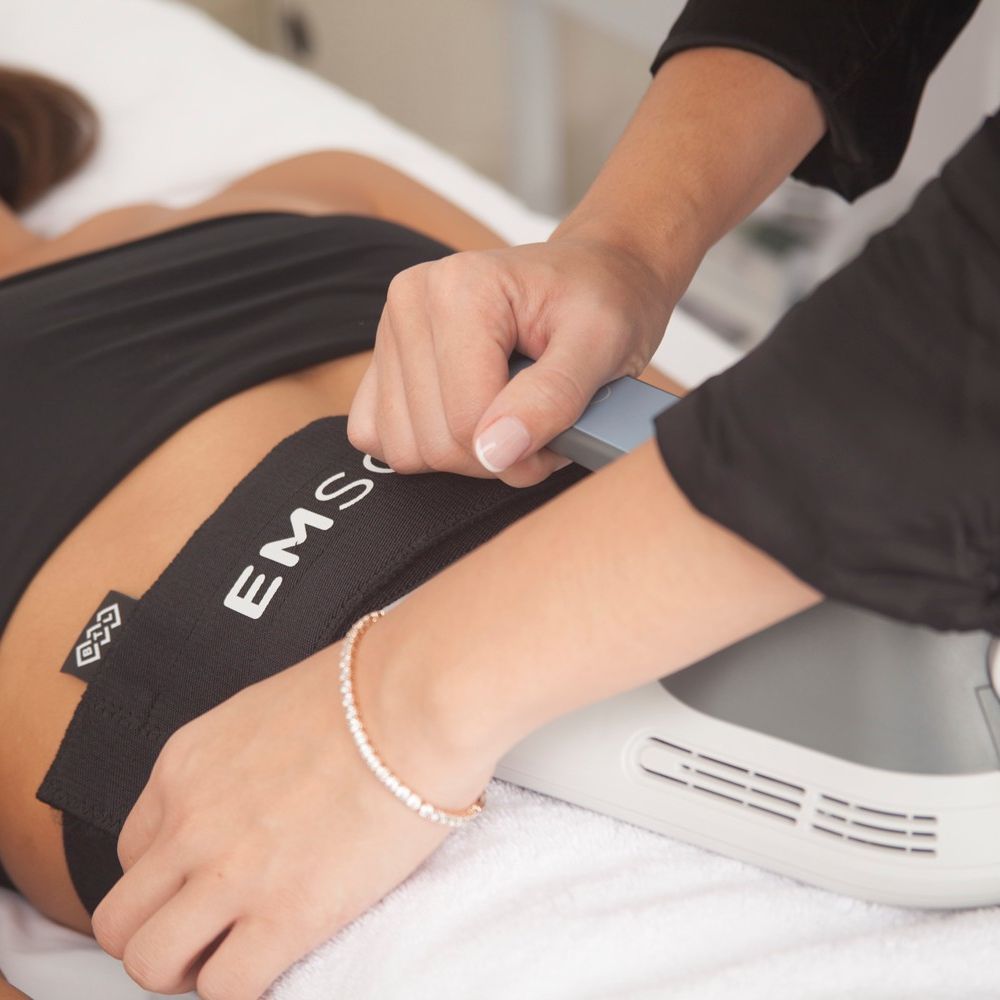
After childbirth, stretch marks may appear alongside loose abdominal skin, reduced muscle tone or stubborn fat. In that situation, Roxana’s post-pregnancy body treatments provide a broader view of the clinic’s non-surgical options. Treatment should begin only when medically appropriate, especially during pregnancy or breastfeeding.
What should you expect from treatment?
Collagen remodelling is slow. Improvement develops over weeks and months rather than overnight, and a series of sessions may be recommended. Temporary redness, warmth, swelling or flaking can occur, depending on the procedure. Your practitioner should explain preparation, aftercare, likely downtime and warning signs before treatment.
A thorough consultation should consider:
- Whether the marks are red, white or mixed
- Their depth, width, location and likely age
- Your skin tone and history of pigmentation or scarring
- Pregnancy, breastfeeding, medication and relevant health conditions
- Your tolerance for downtime and your expectations
Frequently asked questions
Do red stretch marks always turn white?
Many gradually fade to a pale or silvery colour, although the timing and final shade vary. Starting red stretch marks treatment early may improve their appearance before they mature, but it cannot guarantee that every mark will disappear.
Are white stretch marks too old to treat?
No. They are more established and generally slower to respond, but fractional laser or radiofrequency microneedling may improve their texture and visibility. Realistic goals and consistency are especially important for mature marks.
How many sessions will I need?
There is no fixed number. It depends on the treatment, body area, stage of the marks and how your skin responds. A clinician can estimate a course only after examining your skin.
When should I seek medical advice?
Arrange a medical review if stretch marks appear suddenly without an obvious cause, cover a large area or occur alongside other symptoms. This is particularly important if you use corticosteroids or have a condition affecting hormones or connective tissue.
The takeaway on red vs white stretch marks
In the comparison of red vs white stretch marks, red marks are usually easier to improve because they are newer, more vascular and still active. White marks have matured into paler, thinner tissue, so treatment centres on gradual collagen remodelling and may take longer.
That difference should guide the plan, not discourage you. Whether your marks are recent, mature or mixed, a personalised consultation can clarify what is achievable. For professional stretch mark removal in Dubai, Roxana Aesthetics Clinic can assess the colour, texture and stage of your stretch marks before recommending a measured treatment plan.
This article is for general education and does not replace medical advice. Results and suitability vary from person to person.