
In short: Most elective aesthetic treatments, including Botox, fillers, skin boosters, energy devices, lasers and medium or deep peels, are usually postponed during pregnancy. That isn’t because harm has been proven. It’s because safety hasn’t been studied, and the treatments can wait. Gentle facials, pregnancy-safe skincare and sun protection can usually continue. Breastfeeding guidance is more mixed, so check each treatment with your doctor.
Key takeaways
- The main reason to pause elective treatments in pregnancy is missing safety data, not proven harm.
- Retinoids and hydroquinone are generally avoided in pregnancy. Azelaic acid, limited benzoyl peroxide and mineral sunscreen are usually considered safer.
- Melasma, the “mask of pregnancy”, is common and often fades after birth. Daily tinted sunscreen is the safest step in Dubai’s sun.
- During breastfeeding, a few treatments may be discussed case by case, but most clinics still wait until breastfeeding ends for injectables.
- Always tell your clinician if you are pregnant, trying to conceive or breastfeeding, even for a facial.
Why most treatments are paused in pregnancy
Pregnant women are rarely included in clinical trials, so for most cosmetic treatments there is simply no reliable safety data. Because aesthetic treatments are elective, the standard approach is to wait. The risk of harm isn’t known to be high, but there is nothing to gain by taking an unknown risk for a cosmetic result.
Pregnancy also changes the skin. Hormones increase pigmentation, blood flow and sensitivity, so skin may react differently to peels, lasers and heat. Results can be unpredictable, and melasma can flare.
Roxana’s own service pages list pregnancy as a reason not to have Botox, dermal fillers, Thermage FLX, Morpheus8, laser hair removal and microblading, among others.
At a glance: pregnancy and breastfeeding
| Treatment | Pregnancy | Breastfeeding | Notes |
|---|---|---|---|
| Botox (botulinum toxin) | Postpone | Usually postponed; can be discussed | Small studies found little or no toxin in breast milk after cosmetic doses (LactMed) |
| Hyaluronic acid filler and filler dissolving | Postpone | Usually postponed | No safety studies; dissolving may be considered for a complication |
| Skin boosters, polynucleotides (Rejuran, salmon DNA), Profhilo, mesotherapy, PRP | Postpone | Usually postponed | No safety data |
| Laser hair removal | Usually postponed | Can often be discussed | Hormonal hair growth often settles after birth |
| Pigmentation lasers and IPL | Postpone | Discuss | Melasma is unstable in pregnancy and often fades afterwards |
| Radiofrequency and ultrasound devices (Morpheus8, Thermage FLX and EMSculpt NEO | Postpone | After medical clearance | Body treatments wait until recovery from birth or a caesarean |
| Medium or deep chemical peels | Avoid | Discuss | Superficial glycolic acid at low strength is usually considered acceptable at home |
| Microblading and semi-permanent make-up | Postpone | Roxana lists breastfeeding as a contraindication | Infection and healing considerations |
| Gentle facials (cleansing, hydrating) | Usually acceptable | Usually acceptable | Products must avoid retinoids and strong acids |
| IV drips | Only if a doctor prescribes it for a medical reason | Discuss with a doctor | Not a cosmetic treatment in pregnancy |
Skincare: what to stop and what’s usually fine
A 2026 dermatology review of skin treatment in pregnancy (Davis et al., 2026) and the American Academy of Dermatology (AAD) broadly agree:
Generally avoided in pregnancy
- Retinoids: tretinoin, adapalene, tazarotene and retinol products, and especially oral isotretinoin.
- Hydroquinone: a common pigment-lightening cream, avoided because of absorption through the skin.
- High-strength acids: professional-strength peels, and salicylic acid above about 2%.
Usually considered safer
- Azelaic acid: often the first choice for melasma and acne in pregnancy.
- Benzoyl peroxide: in limited amounts for acne.
- Low-strength glycolic acid: about 10% or less.
- Vitamin C and niacinamide: generally considered acceptable, though large studies are lacking.
- Mineral sunscreen with iron oxides: the safest step for melasma.
Check every product with your doctor or pharmacist, including ones bought abroad, which may contain hidden steroids or hydroquinone.
Melasma in pregnancy, and why Dubai sun matters
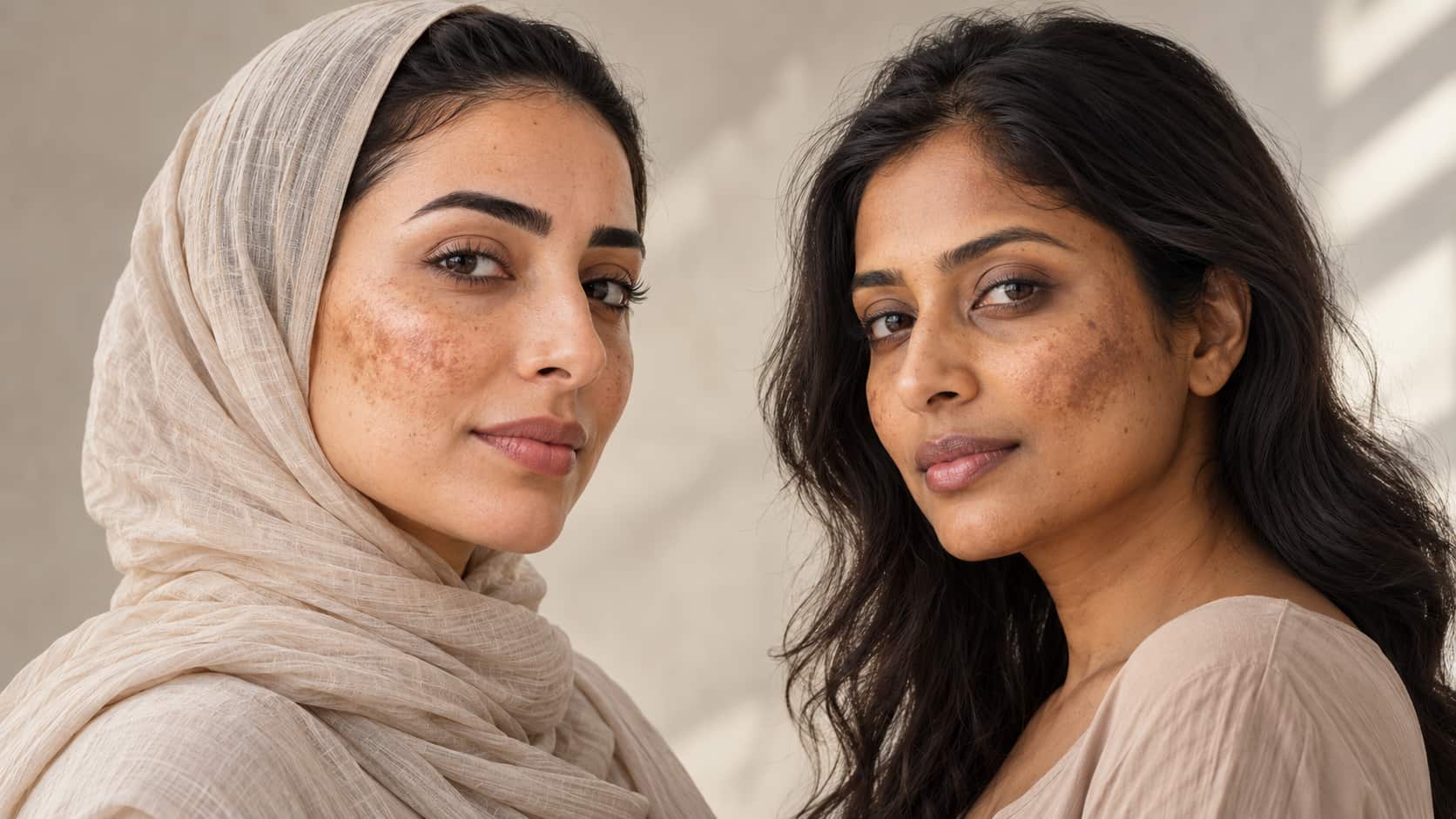
Melasma is patchy brown pigmentation on the cheeks, forehead or upper lip, triggered by hormones and light. It is so common in pregnancy that it is nicknamed the “mask of pregnancy”. It often improves within a year after birth (Davis et al., 2026).
In Dubai, strong UV and visible light for most of the year make melasma harder to control. Wear a broad-spectrum tinted sunscreen every day, reapply it outdoors, and use a wide-brimmed hat. Wait until after pregnancy, and ideally after breastfeeding, before lasers or strong peels. Treating melasma too early often leads to rebound darkening.
Breastfeeding: a more nuanced picture
Breastfeeding guidance differs from pregnancy because the question is whether anything passes into breast milk.
- Botox: the US National Library of Medicine’s lactation database (LactMed) notes that onabotulinumtoxinA has been studied in breastfeeding only at cosmetic doses, and was either undetectable or found in very small amounts in milk (LactMed). Many clinics still prefer to wait, especially with a newborn or premature baby. This is a decision to make with your doctor.
- Fillers and skin boosters: there are no lactation studies, so most clinicians wait.
- Lasers, gentle peels and facials: these act on the skin surface and are often discussed case by case, avoiding the chest area.
Trying to conceive
If you are actively trying to conceive, many clinicians treat this like early pregnancy, because pregnancy may not be confirmed for several weeks. It is sensible to time injectables and stronger treatments for before you start trying, and to stop retinoids when you stop contraception. Tell your clinician if there is any chance you might be pregnant.
When can treatments restart after birth?
| Treatment | Typical timing (individual advice varies) |
|---|---|
| Gentle facials and skincare | When you feel ready |
| Laser hair removal | After hormones settle; often a few months after birth |
| Botox and fillers | Many clinics wait until breastfeeding ends |
| Pigmentation treatment | Once melasma is stable, often after breastfeeding |
| Body treatments (EMSculpt NEO, Morpheus8 body) | After medical clearance, and longer after a caesarean |
Postpartum hair shedding is also common two to four months after birth and usually recovers. If it continues, Roxana’s hair loss treatment consultations can check for other causes.
How Roxana Aesthetics can help
At Roxana Aesthetics Clinic on Al Wasl Road, pregnancy and breastfeeding are checked at every consultation. Treatments that aren’t suitable are postponed rather than adapted. For clients who are expecting, the team can suggest pregnancy-appropriate options and plan treatments for after the birth, such as postpartum stretch-mark treatment or Morpheus8 for the stomach.
The bottom line
During pregnancy, it is usually best to pause aesthetic treatments such as Botox, fillers, skin boosters, energy devices and strong peels, and to switch to pregnancy-safe skincare and daily sun protection. During breastfeeding, some treatments may be considered case by case, but injectables are usually still postponed. If you are pregnant, breastfeeding or planning a pregnancy, book a consultation with Roxana Aesthetics. The team can help you keep your skin comfortable now and plan treatments for when the time is right.
Frequently asked questions
Can I get Botox while pregnant?
Botox is generally not recommended during pregnancy. There are no studies proving it is safe for an unborn baby. Harm hasn’t been shown, but Botox is an elective treatment, so the standard advice is to wait. If you had Botox before you knew you were pregnant, tell your obstetrician. Published reports haven’t shown a clear pattern of problems, but the numbers are small.
Can I have Botox while breastfeeding?
Limited research suggests very little or no botulinum toxin passes into breast milk after cosmetic doses. Many clinics still prefer to wait until breastfeeding ends, especially with a newborn or premature baby. Discuss the timing with your doctor, who can weigh your situation and your baby’s age.
Are fillers safe while breastfeeding?
There are no studies on hyaluronic acid filler during breastfeeding, so most clinicians recommend waiting until breastfeeding has finished. Filler is an elective treatment, and waiting avoids any unknown risk. Dissolving filler may still be considered if there is a complication that needs treatment.
Can I have laser hair removal while pregnant?
Laser hair removal is usually postponed during pregnancy. Its safety hasn’t been studied, and hormonal changes can make results less predictable. Hair growth caused by pregnancy hormones often settles after birth. Shaving or trimming is a simple alternative until then. Laser may be discussed case by case during breastfeeding, avoiding the chest.
Which skincare should I stop when I find out I’m pregnant?
Retinoids, including retinol, tretinoin and adapalene, and hydroquinone are generally stopped during pregnancy. High-strength acids and professional peels are usually avoided too. Azelaic acid, limited benzoyl peroxide, low-strength glycolic acid and mineral sunscreen are commonly considered safer. Check every product with your doctor or pharmacist.
Can I get a facial while pregnant?
A gentle cleansing or hydrating facial is usually acceptable during pregnancy, as long as the products avoid retinoids, hydroquinone and strong acids, and the treatment avoids heat-based devices. Tell the clinic you are pregnant when you book, so the facial can be adapted. Lying flat for long periods may be uncomfortable later in pregnancy.
What can I do about melasma while pregnant?
The safest approach is daily broad-spectrum tinted sunscreen, a hat outdoors, and gentle pregnancy-safe skincare such as azelaic acid if your doctor agrees. Melasma often improves within a year after birth. Lasers and strong peels are best delayed until after pregnancy, and ideally after breastfeeding, to avoid rebound darkening.
When can I restart Botox after giving birth?
Many clinics wait until breastfeeding has ended. If you are not breastfeeding, Botox can often restart once you feel recovered and your doctor agrees. Timing is individual, so a consultation is the best place to plan it.
This article is general medical information and not a substitute for advice from your obstetrician, midwife, paediatrician or dermatologist. Pregnancy and breastfeeding guidance varies with individual health. Always tell your clinician if you are pregnant, could be pregnant, or are breastfeeding.