Losing a significant amount of weight with a GLP-1 medication can be life-changing. Clothes fit differently, movement may feel easier, and health markers often improve. Yet the mirror can reveal a more complicated result: a smaller waist without the firmness or definition you expected.
During substantial weight loss, the body can lose fat as well as lean tissue. If appetite falls sharply, eating enough protein may become more difficult. Add limited resistance exercise to the picture and muscles can appear flatter, particularly across the abdomen, buttocks, arms and thighs.
This is why Emsculpt Neo after GLP-1 weight loss is attracting attention. The non-surgical treatment stimulates targeted muscles while applying radiofrequency energy to the treatment area. But can it genuinely replace lost muscle, and where does it fit alongside exercise, nutrition and skin tightening?
Why can muscle change during GLP-1 weight loss?
GLP-1-based medicines such as semaglutide and tirzepatide help many people achieve meaningful weight loss. Most of the change should ideally come from fat, but lean mass may fall too.
Lean mass is not identical to skeletal muscle. It also includes water, organs and other fat-free tissues. A body-composition scan showing lower lean mass does not, by itself, mean that someone has developed sarcopenia or clinically significant muscle wasting.
Nevertheless, the issue deserves attention. A systematic review of GLP-1 therapies found reductions in both fat and lean mass, although lean mass as a proportion of total body weight was not significantly affected. More recent research stresses that individual responses vary and that strength, physical function and muscle quality matter alongside measurements from a scan.
Several factors may contribute to GLP-1 muscle loss:
- A large calorie deficit maintained over several months
- Insufficient protein because of reduced appetite
- Limited strength or resistance training
- Rapid weight loss with little time for physical adaptation
- Age, hormonal changes, illness or low starting muscle mass
This does not mean GLP-1 treatment is harmful or should be stopped. Medication decisions must remain with the prescribing doctor. It simply means that muscle preservation should be considered during the weight-loss journey rather than after the target weight has been reached.
What does Emsculpt Neo actually do?
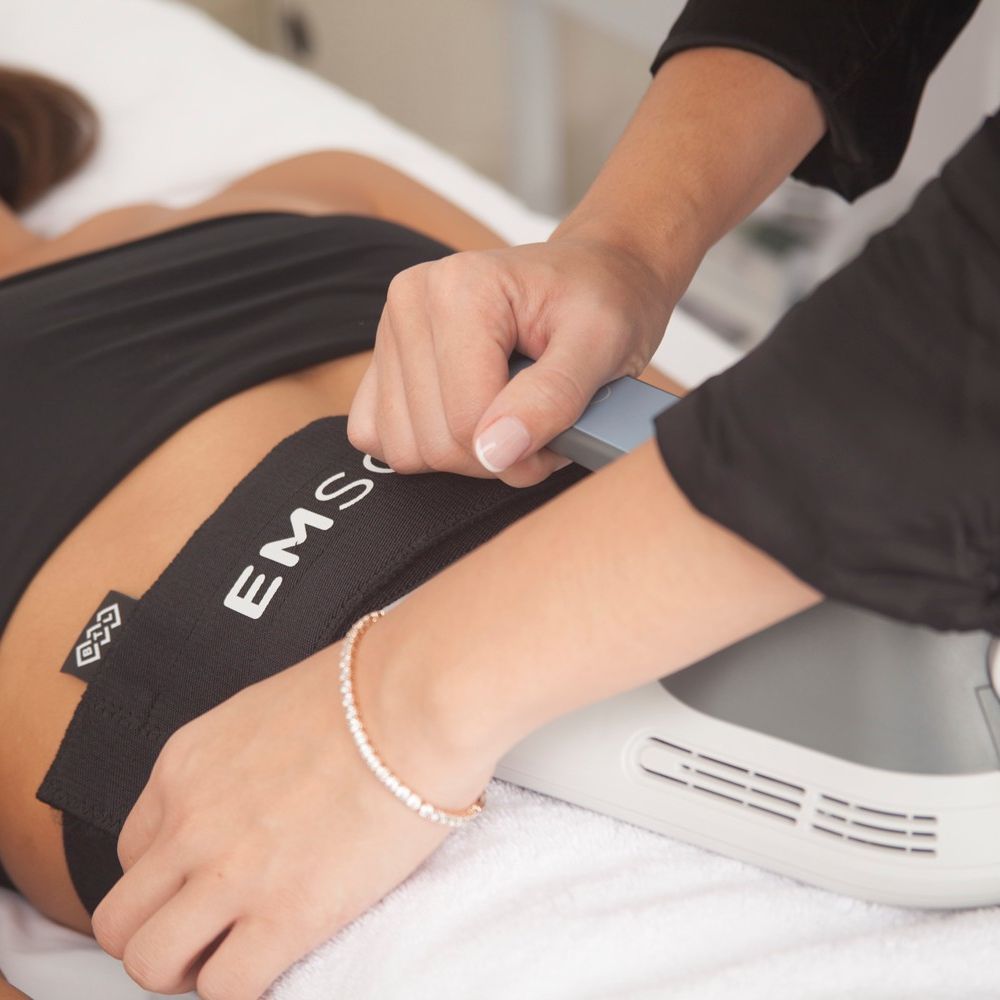
Emsculpt Neo combines high-intensity focused electromagnetic energy, known as HIFEM+, with synchronised radiofrequency. The electromagnetic energy causes repeated, intense contractions in the muscles beneath the applicator. These are described as supramaximal contractions because they are stronger and more frequent than contractions someone could voluntarily sustain during a conventional workout.
At the same time, radiofrequency warms the muscles and overlying fat layer. The combined treatment is designed to improve muscle tone and firmness while reducing a localised layer of subcutaneous fat.
In a sham-controlled abdominal study, researchers reported an increase in rectus abdominis thickness and a reduction in subcutaneous fat thickness after treatment. An earlier MRI evaluation also identified changes in abdominal muscle thickness after a short treatment course.
These findings support the use of Emsculpt Neo for targeted body sculpting, but they should not be interpreted as a promise that every patient will achieve the same percentage change. Study sizes, treatment protocols, body areas and individual starting points differ.
The important word is “targeted.” A session works on the muscles directly beneath the applicator. It does not rebuild every muscle that may have been affected by weight loss.
Can Emsculpt Neo rebuild muscle after GLP-1 weight loss?
Emsculpt Neo may help strengthen, thicken and improve the appearance of treated muscles. For someone whose weight has stabilised but whose abdomen or buttocks look less firm, that change could produce a more defined contour.
This is the most realistic way to view Emsculpt Neo after GLP-1 weight loss: it is a focused addition to a broader muscle-recovery plan.
It does not replace progressive resistance training. A full-body exercise programme trains movement patterns, balance, bones, tendons and muscles that an aesthetic applicator cannot reach. Likewise, the treatment cannot correct inadequate nutrition.
If reduced appetite has made regular meals difficult, speak to your doctor or a qualified dietitian. Protein and calorie requirements should be personalised according to your health, kidney function, medication, age and activity level.
A sensible approach combines medically supervised GLP-1 care, supportive nutrition and resistance exercise, followed by targeted aesthetic treatment for areas where muscle definition still lags. That combination considers physical function as well as appearance.
How could Emsculpt Neo improve body shape?
After weight loss, body shape is influenced by more than the amount of fat remaining. Muscle creates structure beneath the skin. When the abdominal wall, glutes or thighs are less conditioned, the body can look softer even at a significantly lower weight.
By stimulating a specific muscle group, Emsculpt Neo may create a firmer foundation and a more defined contour. Roxana’s Emsculpt Neo Dubai treatment can be used on areas such as the abdomen, buttocks, arms, thighs and calves, subject to a professional assessment.
The radiofrequency component may also help reduce a modest, localised fat layer, making the underlying contour easier to see.
However, body contouring after weight loss is not the same as losing more weight. Emsculpt Neo is not intended to produce a major change on the scale, treat obesity or remove large volumes of fat. It is generally more appropriate for refinement when body weight is reasonably stable.
What about loose skin after weight loss?
Muscle tone and skin laxity are separate concerns, although they frequently appear together. Creating a firmer foundation beneath the skin may improve the silhouette, but it cannot remove substantial excess skin.
The radiofrequency component of Emsculpt Neo may offer a degree of firming, but noticeable skin laxity could require a different or combined approach. Roxana Aesthetics provides a dedicated assessment for loose skin after weight loss.
Depending on the condition of the skin, the team may recommend Alma PrimeX body contouring. This treatment focuses more directly on skin firmness, cellulite and localised fat using ultrasound and radiofrequency technology.
Some patients may benefit from a carefully sequenced combination of treatments, while others need only one modality. Substantial hanging or folded skin may require a surgical opinion because non-invasive devices cannot reproduce the results of surgical skin removal.
Who may be a suitable candidate?
Emsculpt Neo after GLP-1 weight loss may be appropriate for an adult who:
- Has reached or is approaching a stable weight
- Wants improved definition in a specific body area
- Can maintain supportive nutrition and regular physical activity
- Prefers a non-surgical treatment without planned downtime
- Understands that results are gradual and localised
A consultation remains essential because electromagnetic and radiofrequency treatments are not suitable for everyone. Pregnancy, certain metal or electronic implants, and some medical conditions may prevent treatment.
Tell your clinician about your complete medical history and every prescription medicine you use, including GLP-1 medication. Do not stop or alter that medication for an aesthetic treatment unless instructed by your prescribing doctor.
What does an Emsculpt Neo session feel like?
During treatment, an applicator is positioned securely over the selected area. Patients generally feel strong, rhythmic muscle contractions accompanied by warmth. The intensity is increased gradually according to comfort and the clinical treatment plan.
A session at Roxana Aesthetics typically lasts around 30 minutes per treated area. Most patients follow a planned series rather than expecting one appointment to produce the final result.
There is usually no formal recovery period. The muscles may temporarily feel as though they have completed a demanding workout, and mild soreness can occur. The practitioner will explain how sessions should be spaced and when progress photographs or measurements may be taken.
Changes are not immediate. Some people first notice that the area feels firmer, while visible contour can continue developing over the following weeks. Starting muscle condition, fat thickness, lifestyle and the completed treatment course all influence the outcome.
Creating a sensible post-GLP-1 body plan
Before booking a device-led treatment, it helps to ask a more useful question than, “How quickly can I look toned?” Instead, ask what your body needs at this stage.
- Review your progress with your prescribing clinician. Discuss persistent weakness, fatigue, very low food intake or ongoing rapid weight loss.
- Assess more than body weight. Strength, daily function, waist measurements and professionally interpreted body-composition data can provide useful context.
- Create a realistic resistance routine. A sustainable programme is more helpful than an ambitious schedule that lasts only a few weeks.
- Prioritise appropriate nutrition. Protein requirements vary, particularly when medical conditions are present, so personalised guidance matters.
- Match the treatment to the concern. Reduced muscle definition, residual fat, cellulite and loose skin are different issues. They may require different services.
Roxana’s wider selection of body treatments allows patients to compare appropriate options instead of trying to address every post-weight-loss concern with a single procedure.
Why does a personalised assessment matter?
Two people can lose the same number of kilograms and finish with very different concerns. One person may have good skin recoil but reduced abdominal definition. Another may have retained muscle but developed loose skin around the arms or abdomen.
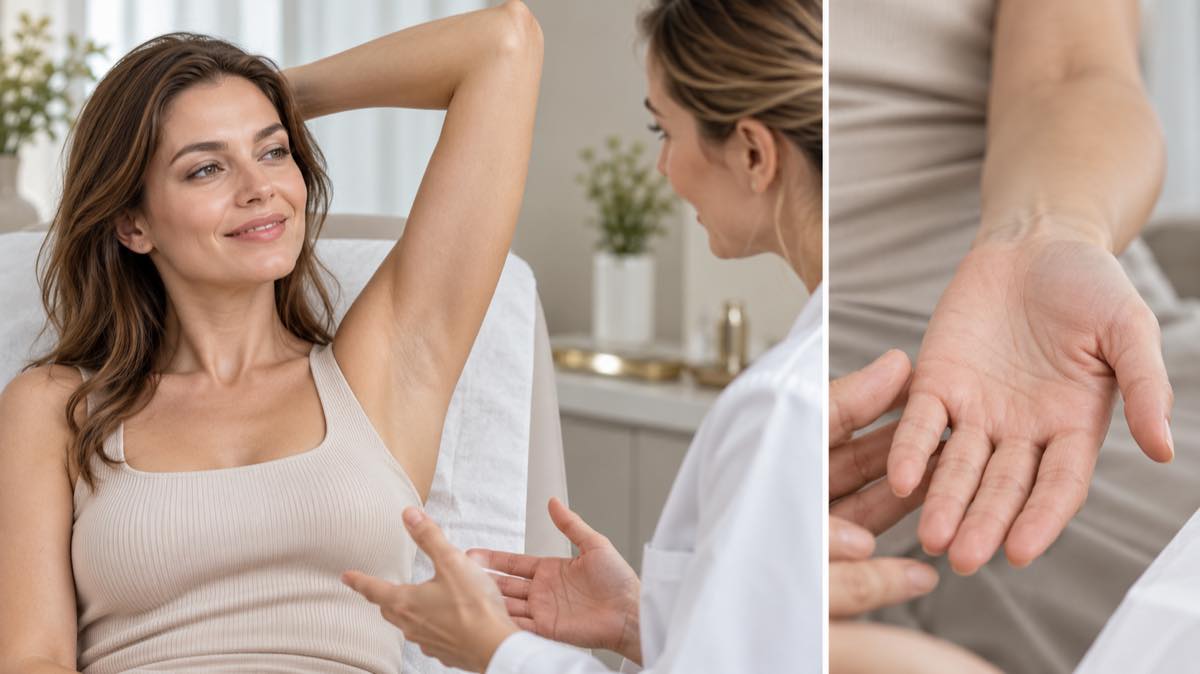
At Roxana Aesthetics Clinic in Al Safa, Dubai, the consultation allows these differences to guide the plan. The clinician can assess the target area, review relevant medical information and explain whether Emsculpt Neo is suitable alone or alongside another treatment.
The bottom line
Can Emsculpt Neo rebuild lost muscle after GLP-1 weight loss? Current evidence suggests that HIFEM with radiofrequency can increase muscle thickness and tone in treated areas while supporting localised fat reduction. For an appropriately selected patient, this may improve definition and body shape.
The best results come from treating it as one part of muscle building after weight loss, not as a replacement for nutrition, resistance training or medical care.
If your weight is stable and one area still feels softer or less defined than you would like, a personalised consultation at Roxana Aesthetics can clarify what is achievable and which treatment, if any, is right for your body.
Disclaimer: This article is provided for general informational and educational purposes only. Roxana Aesthetics Clinic does not prescribe, supply or administer GLP-1 medications. Any references to GLP-1 treatments are included solely for editorial context. This content does not constitute medical advice, diagnosis or treatment and should not replace consultation with a qualified healthcare professional. Always consult your prescribing doctor before starting, stopping or changing any medication. Individual suitability and treatment results may vary. Images are for illustrative purposes only and do not represent guaranteed outcomes.