In short: Laser hair removal can greatly reduce dark, coarse hair on the upper lip, chin, jawline and neck. It works less well on fine, light, grey or red hair. Facial hair driven by hormones, such as with PCOS, often needs more sessions and ongoing maintenance, because hormones keep stimulating new follicles. In Middle Eastern and South Asian women, laser can occasionally trigger extra fine hair growth nearby (paradoxical hypertrichosis), so experienced settings and realistic expectations matter.
Key takeaways
- Laser targets pigment in the hair, so dark hair responds best. Fine or light hair often needs a different method.
- Hormonal facial hair usually needs a full course plus maintenance sessions, sometimes alongside medical treatment.
- New or rapidly worsening facial hair, especially with irregular periods, acne or scalp thinning, deserves a hormone check first.
- International guidance warns that Middle Eastern and Mediterranean women with facial hair have a higher risk of paradoxical hair growth after laser.
- Long-wavelength lasers with skin cooling are recommended for darker skin tones.
Why women get facial hair
Some fine facial hair is normal. Darker, coarser hair on the upper lip, chin, jaw or neck is common too, and it is influenced by genetics, ethnicity and hormones. Women of Middle Eastern, Mediterranean and South Asian heritage often have naturally darker, denser facial hair.
Hirsutism means excess coarse hair in a male-type pattern, such as the chin, upper lip, chest or abdomen. Its most common cause is polycystic ovary syndrome (PCOS), but it can also run in families without a hormonal problem. Less commonly, it has other medical causes.
See a doctor first if facial hair:
- appears suddenly or gets rapidly worse
- comes with irregular periods, acne, scalp hair thinning or weight changes
- comes with a deepening voice or other new body changes
How laser hair removal works on the face
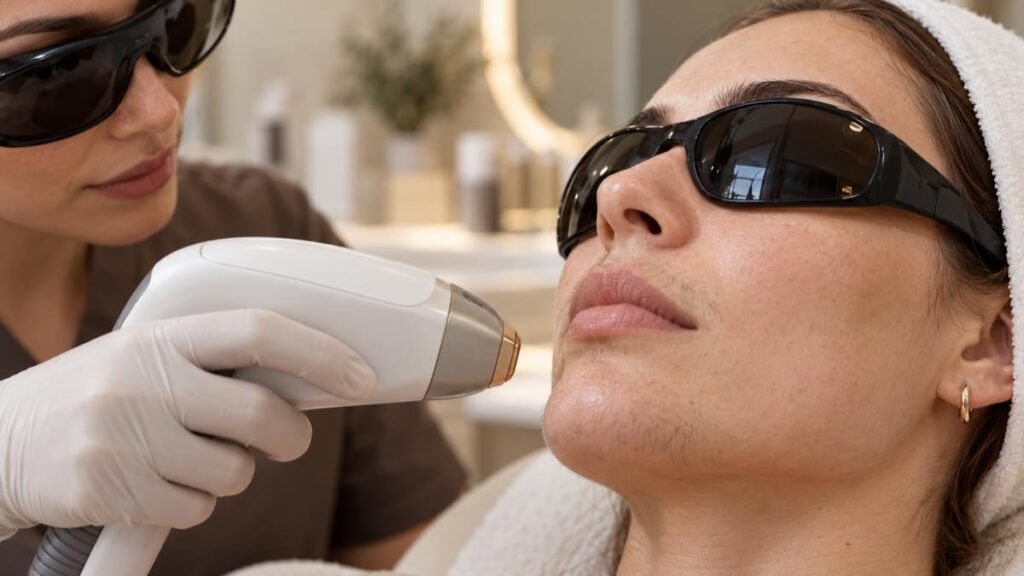
Laser light is absorbed by the pigment (melanin) in the hair. The heat travels to the follicle and damages its ability to regrow hair. Only follicles in the active growth phase are affected at each session, so several sessions are needed several weeks apart.
Roxana uses the Soprano Titanium diode laser from Alma, which combines 755, 810 and 1064 nm wavelengths with built-in skin cooling. Its laser hair removal page lists the face, upper lip and chin as treatable areas. For darker skin, the Endocrine Society suggests long-wavelength, long-pulse lasers such as diode or Nd:YAG with appropriate skin cooling.
In Dubai, the DHA requires that laser and IPL hair removal on the body be performed by a practitioner of the same gender as the patient. The rule doesn’t apply to the face and outer limbs.
What results to expect
| Hair type | Expected response |
|---|---|
| Dark, coarse hair on light to medium skin | Usually the best reduction |
| Dark hair on darker skin | Good reduction with suitable long-wavelength settings |
| Fine, light or “peach fuzz” hair | Poor response; may risk stimulating growth |
| Grey, white, red or blonde hair | Little or no response; electrolysis is often better |
| Hormonal hair (such as PCOS) | Reduction, but new hairs may keep appearing; maintenance needed |
Sessions: many people need around six to eight or more facial sessions, then maintenance. Facial hair often needs more sessions than body areas, especially when hormones are involved. See how many laser sessions you actually need.
Other options for facial hair
| Option | Best for | Notes |
|---|---|---|
| Electrolysis | Light, grey or fine hairs; small areas | Permanent hair-by-hair removal; several sessions |
| Threading, waxing, tweezing | Quick short-term removal | Can irritate and darken skin over time |
| Shaving or dermaplaning | Quick and easy at home | Doesn’t make hair grow back thicker |
| Prescription cream (eflornithine) | Slowing regrowth alongside other methods | Needs a doctor; availability varies |
| Hormonal or medical treatment | Hirsutism from PCOS or other causes | Prescribed by a doctor; takes months |
Avoid plucking or waxing between laser sessions, because laser needs the hair root in place. Shaving is fine.
Dubai tips for facial laser
- Sun: avoid tanning and strong sun before and after sessions. Use daily sunscreen, which the Jordanian study also linked with lower paradoxical-growth risk.
- Heat: skip saunas and intense workouts for a day after treatment.
- Skincare: pause retinoids and exfoliating acids around sessions if advised.
- Pigmentation: if you have melasma or post-acne marks, mention them. Settings may need adjusting.
How Roxana Aesthetics can help
Roxana Aesthetics Clinic on Al Wasl Road offers facial laser hair removal using Soprano Titanium, with settings tailored to skin tone and hair type. For clients with suspected hormonal hair growth, a doctor can advise on assessment alongside laser. Clients with PCOS may also find the PCOS laser guide helpful.
The bottom line
Laser hair removal can make a real difference to dark upper-lip and chin hair, but facial hair, especially hormonal hair, usually needs patience and maintenance. Fine or light hair responds poorly, and Middle Eastern and South Asian women should know about the small risk of paradoxical growth. If facial hair is new or worsening, check your hormones first. Book a consultation with Roxana Aesthetics for a skin and hair assessment and a plan that suits your hair type.
Frequently asked questions
Is laser hair removal on the upper lip permanent?
Laser offers long-term hair reduction rather than guaranteed permanent removal. Many treated follicles stop producing hair, and the remaining hair is often finer. Hormones can stimulate new follicles over time, so occasional maintenance sessions are common, especially for hormonal hair.
How many laser sessions do I need for chin hair?
Many women need around six to eight or more sessions spaced several weeks apart, followed by maintenance. Chin hair linked to hormones, such as with PCOS, often needs more sessions than other areas. Your clinician will adjust the plan based on how your hair responds.
Does laser work on fine or light facial hair?
Not well. Laser targets the pigment in hair, so fine, light, blonde, grey or red hairs absorb little energy. Treating very fine hair may even increase the risk of paradoxical growth. Electrolysis or other methods are often better for these hairs.
What is paradoxical hair growth after laser?
It’s new or thicker hair appearing in or near a treated area. It is more often seen on the face and neck in people with darker skin, dark thick hair and hormonal conditions, including Middle Eastern women. Careful settings and avoiding fine hair reduce the risk, and it can usually be managed if it happens.
Should I get my hormones checked before facial laser?
Yes, if facial hair is new, getting worse quickly, or comes with irregular periods, acne, scalp thinning or weight changes. These can be signs of PCOS or another hormonal condition. Treating the cause improves long-term results from laser.
Can I shave between laser sessions?
Yes. Shaving is fine and doesn’t make hair grow back thicker. Avoid waxing, threading and plucking between sessions, because laser needs the hair root in the follicle to work.
Is facial laser safe for darker skin?
Yes, with appropriate devices and settings. Long-wavelength lasers such as diode or Nd:YAG with skin cooling are recommended for darker skin tones. Avoiding tanning and following aftercare reduce the risk of irritation or pigment changes.
How much does facial laser hair removal cost in Dubai?
Cost depends on the areas treated, such as upper lip, chin, full face or neck, and the number of sessions needed. A personalised plan and quote follow a consultation.
This article is general medical information, not a substitute for medical advice. New or worsening facial hair can be a sign of a hormonal condition and should be assessed by a doctor. Laser results vary with hair colour, skin type and hormones.
Medically Reviewed by: Dr. Natallia Kaliashuk