In short: Rosacea is a long-term skin condition that causes facial redness, flushing, visible blood vessels and sometimes acne-like bumps. Sun, heat and humidity are among its most common triggers, which makes Dubai’s climate challenging. Rosacea can’t be cured, but it can be controlled with gentle skincare, daily sun protection, trigger management, prescription treatments and, for persistent redness and vessels, intense pulsed light (IPL) or vascular laser.
Key takeaways
- In a survey of more than 1,000 people with rosacea, sun exposure (81%), stress (79%) and hot weather (75%) were the most commonly reported triggers.
- Dubai adds year-round UV, high humidity, hot outdoor air and cold air-conditioning, so flushing can be frequent.
- Rosacea is often missed in darker skin, where redness is harder to see and the main symptoms may be bumps, dryness, itching or stinging.
- Prescription creams treat the bumps and inflammation. IPL or vascular lasers treat persistent redness and visible vessels.
- Steroid creams can make rosacea much worse. Don’t use them on the face unless a doctor prescribes them.
What rosacea looks like
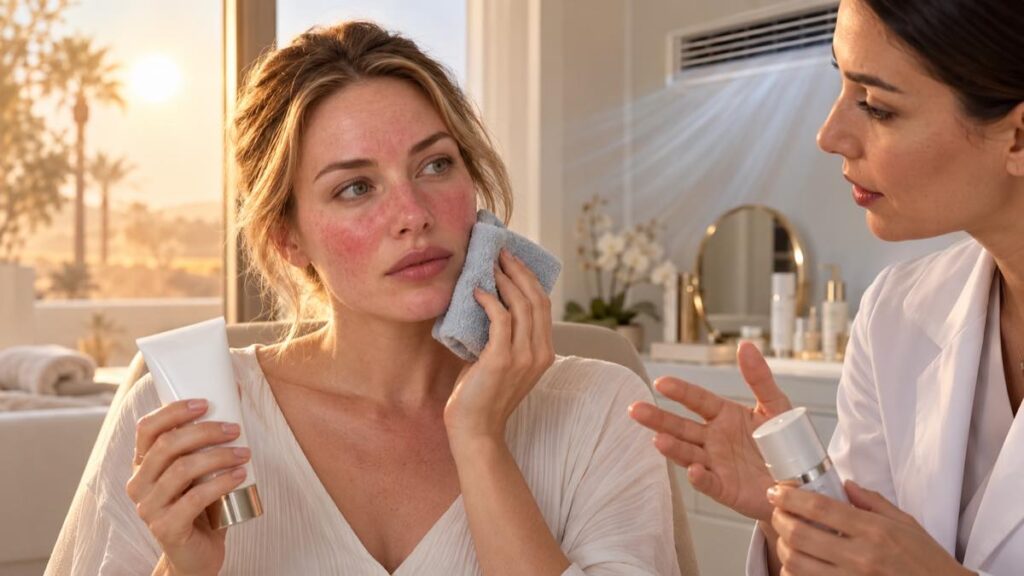
Rosacea usually affects the central face: the cheeks, nose, chin and forehead. Common signs include:
- Flushing: sudden reddening and warmth, often with heat, sun, exercise, spicy food or hot drinks
- Persistent redness across the cheeks and nose
- Visible blood vessels (telangiectasia)
- Bumps and pustules that look like acne, but without blackheads
- Burning, stinging, dryness or sensitivity to skincare products
- Eye irritation (ocular rosacea): gritty, dry or red eyes
- Thickening of the nose skin (rhinophyma), which is less common and mostly affects men
Rosacea in darker skin
Rosacea affects all skin tones but is diagnosed less often in darker skin, partly because redness is harder to see. In Middle Eastern and South Asian skin, rosacea may show mainly as bumps, a dusky or brownish flush, dryness, itching or stinging. It can be mistaken for acne, eczema, melasma or a reaction to products. A study from Saudi Arabia also highlights its effect on quality of life in the region. A correct diagnosis matters, because some acne treatments can irritate rosacea.
Why the UAE climate is hard on rosacea
| UAE factor | Why it matters |
|---|---|
| Strong UV for most of the year | Sun exposure is the most commonly reported trigger |
| Heat, especially May to October | Hot weather triggers flushing |
| Humidity | Many people report humidity as a trigger |
| Air-conditioning | Dries the skin barrier and causes temperature swings between indoors and outdoors |
| Outdoor exercise and heat | Heavy exercise is a common trigger |
| Hot drinks, spicy food | Gahwa, karak, tea and spicy dishes can all cause flushing in some people |
| Hammams, saunas, hot showers | Heat exposure |
| Wind and dust | Irritate sensitive skin |
Triggers differ between people, so a short diary of flare-ups is often more useful than avoiding everything.
Daily care that helps
- Sun protection every day: a broad-spectrum SPF 30 or higher. Mineral (zinc oxide or titanium dioxide) and tinted formulas are often better tolerated. Add a hat and shade outdoors.
- Gentle cleansing: a soap-free, fragrance-free cleanser and lukewarm water.
- Barrier repair: a simple, fragrance-free moisturiser, especially in air-conditioning.
- Avoid irritants: scrubs, alcohol-based toners, strong acids, menthol, fragrance and harsh retinoids unless prescribed.
- Cool down quickly: carry water, and use a cool compress after heat exposure.
- Never use steroid creams on the face without a doctor’s advice. They can worsen rosacea and cause a rosacea-like rash.
Where IPL and laser fit
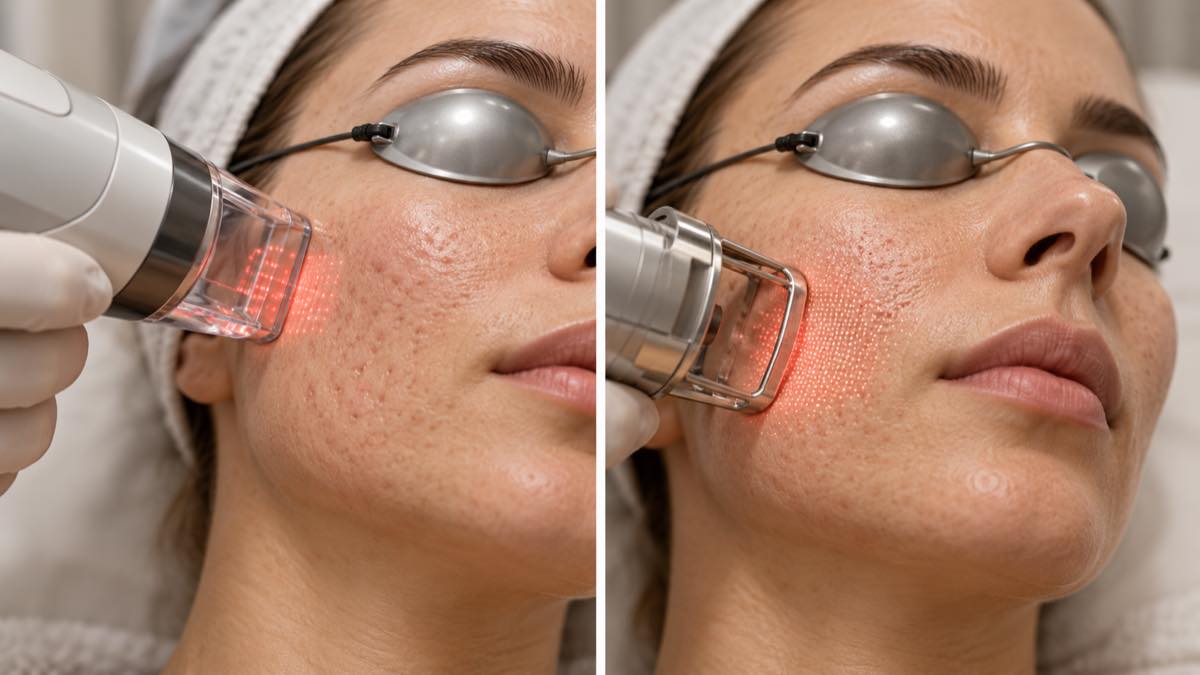
Intense pulsed light (IPL) and pulsed-dye lasers target the haemoglobin in blood vessels, so they can reduce persistent redness and visible vessels that creams don’t shift. Several sessions are usually needed, with maintenance over time.
In darker skin types, IPL needs careful screening and conservative settings because normal skin pigment can absorb light energy and lead to pigment changes. Avoid sun exposure and tanning before and after sessions, which takes planning in Dubai. Light treatments work best once inflammation is controlled with skincare and medical treatment.
Roxana’s IPL photo rejuvenation can be considered for redness and visible vessels after assessment. See also: can IPL treat redness after the Dubai summer?
Treatments to approach with caution
- Strong chemical peels and microdermabrasion can irritate rosacea-prone skin.
- Heat-based facials and steam may trigger flushing.
- Facial scrubs and brushes damage a sensitive barrier.
- Unprescribed steroid or “whitening” creams can worsen redness and cause rebound flares.
Gentle, calming facials with suitable products may be fine for some people. Check with your clinician first.
When to see a doctor
Book an assessment if redness is persistent, flares often, comes with bumps, burning or eye symptoms, or isn’t improving with gentle skincare. Seek prompt advice for eye pain or vision changes.
How Roxana Aesthetics can help
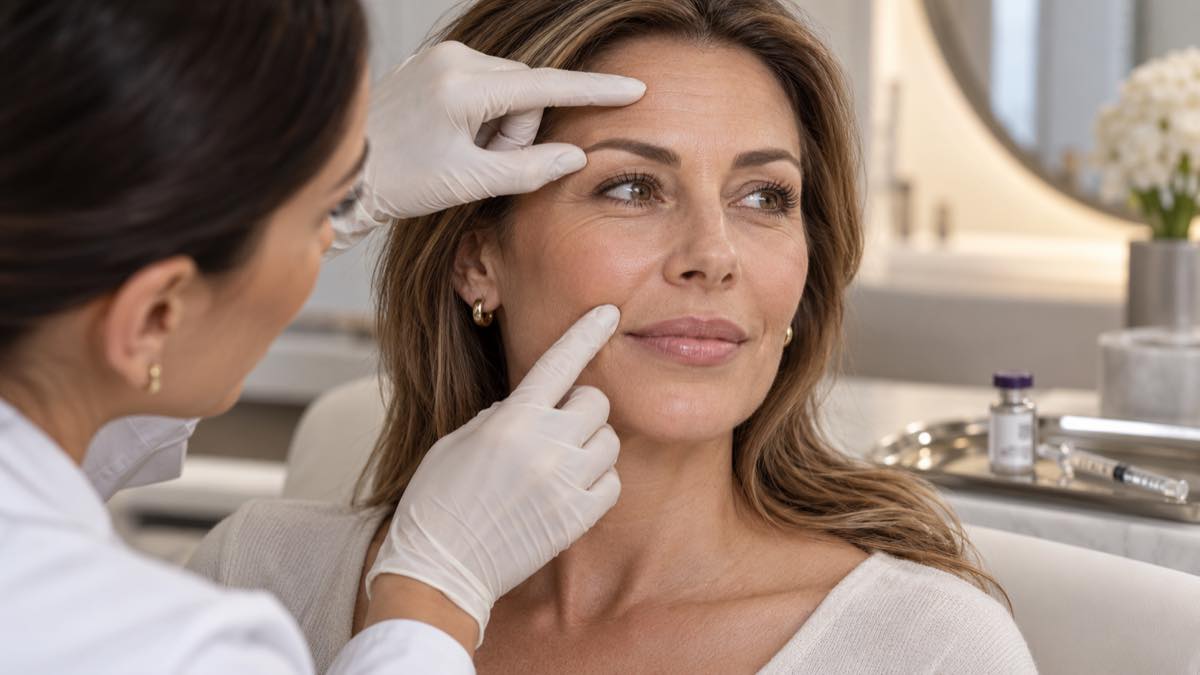
At Roxana Aesthetics Clinic on Al Wasl Road, a dermatologist can assess facial redness, confirm whether it is rosacea or another condition, and plan treatment. That might include skincare and prescription options, and IPL photo rejuvenation for persistent redness and visible vessels once the skin is calm.
The bottom line
Rosacea and facial redness are common in Dubai, where sun, heat, humidity and air-conditioning can all trigger flare-ups. Gentle skincare, daily sun protection and knowing your triggers form the foundation. Prescription treatments calm bumps and inflammation, and IPL or laser can reduce persistent redness and visible vessels. If your face is red more often than not, book a consultation with Roxana Aesthetics for a proper diagnosis and a plan that fits the UAE climate.
Frequently asked questions
What triggers rosacea in Dubai?
Common triggers include sun exposure, hot weather, humidity, emotional stress, heavy exercise, hot drinks, spicy food, alcohol and hot showers or saunas. In Dubai, moving between hot outdoor air and cold air-conditioning can also cause flushing. Triggers vary from person to person, so keeping a simple diary helps identify yours.
Can rosacea be cured?
Rosacea can’t currently be cured, but it can usually be well controlled. Many people see major improvement with the right combination of skincare, sun protection, trigger management, prescription treatments and, for redness and vessels, IPL or laser. Flares may still happen, so maintenance is part of the plan.
Is IPL good for rosacea?
IPL can reduce persistent redness and visible blood vessels, which often don’t respond to creams. It usually needs several sessions and occasional maintenance. In darker skin types, careful screening and conservative settings are important to avoid pigment changes. It works best once inflammation is under control.
How is rosacea different from acne?
Rosacea and acne can both cause red bumps, but rosacea doesn’t cause blackheads or whiteheads. It often comes with flushing, persistent redness, visible vessels and stinging. Some acne treatments can irritate rosacea, so getting the diagnosis right matters before starting treatment.
Does rosacea affect darker skin?
Yes. Rosacea affects all skin tones but is often missed in darker skin, where redness is harder to see. It may show as bumps, a dusky flush, dryness, itching or stinging instead. A dermatologist can distinguish it from acne, eczema, melasma or a product reaction.
What sunscreen is best for rosacea?
A broad-spectrum SPF 30 or higher that you’ll wear every day. Mineral sunscreens with zinc oxide or titanium dioxide, and fragrance-free tinted formulas, are often better tolerated by sensitive skin. Reapply when outdoors, and add a hat in Dubai’s strong sun.
Can steroid creams cause rosacea?
Yes. Using topical steroid creams on the face, especially stronger ones or for long periods, can worsen rosacea or cause a rosacea-like rash called steroid-induced rosacea. Stopping them can cause a temporary flare, so it is best done with a doctor’s guidance.
How much does rosacea treatment cost?
Cost depends on the treatment plan: consultation, prescription products, and whether IPL or laser sessions are needed and how many. A personalised plan and quote follow a dermatologist’s assessment.
This article is general medical information, not a substitute for diagnosis by a doctor. Persistent facial redness can have several causes. Eye symptoms need prompt medical assessment.
Medically Reviewed by: Dr. Natallia Kaliashuk