
There is often a moment, somewhere between newborn feeds and trying to catch up on sleep, when a new mother notices how much her skin has changed. Stretch marks may have appeared across the abdomen, hips, thighs or breasts. Some are red, purple or brown, while others have already begun to fade into fine, silvery lines.
If you are researching postpartum stretch mark removal in Dubai, the question is rarely only, “Which treatment works?” Just as important is, “When is it safe for me to begin?”
There is no universal date that suits every new mother. A consultation may be possible after your routine postnatal review, but treatment should wait until your body has healed, any caesarean wound has recovered and your maternity-care professional is satisfied with your progress.
At Roxana Aesthetics Clinic, people who are pregnant or breastfeeding are not considered suitable for the clinic’s laser stretch-mark treatment. This means that a consultation and the first treatment session may take place at different stages.
Most importantly, there is no deadline. Stretch marks are a normal record of rapid physical change, not a flaw that needs to be corrected urgently. Treatment is a personal choice and should fit around your recovery.
Why do stretch marks develop during pregnancy?
Stretch marks, medically known as striae, are a form of scarring. During pregnancy, the skin expands quickly while hormonal changes can affect collagen and elastin—the fibres that help skin remain firm and flexible.
Genetics, age, the speed at which the skin stretches and individual skin characteristics all play a part. This explains why one person may develop many visible marks while another develops only a few.
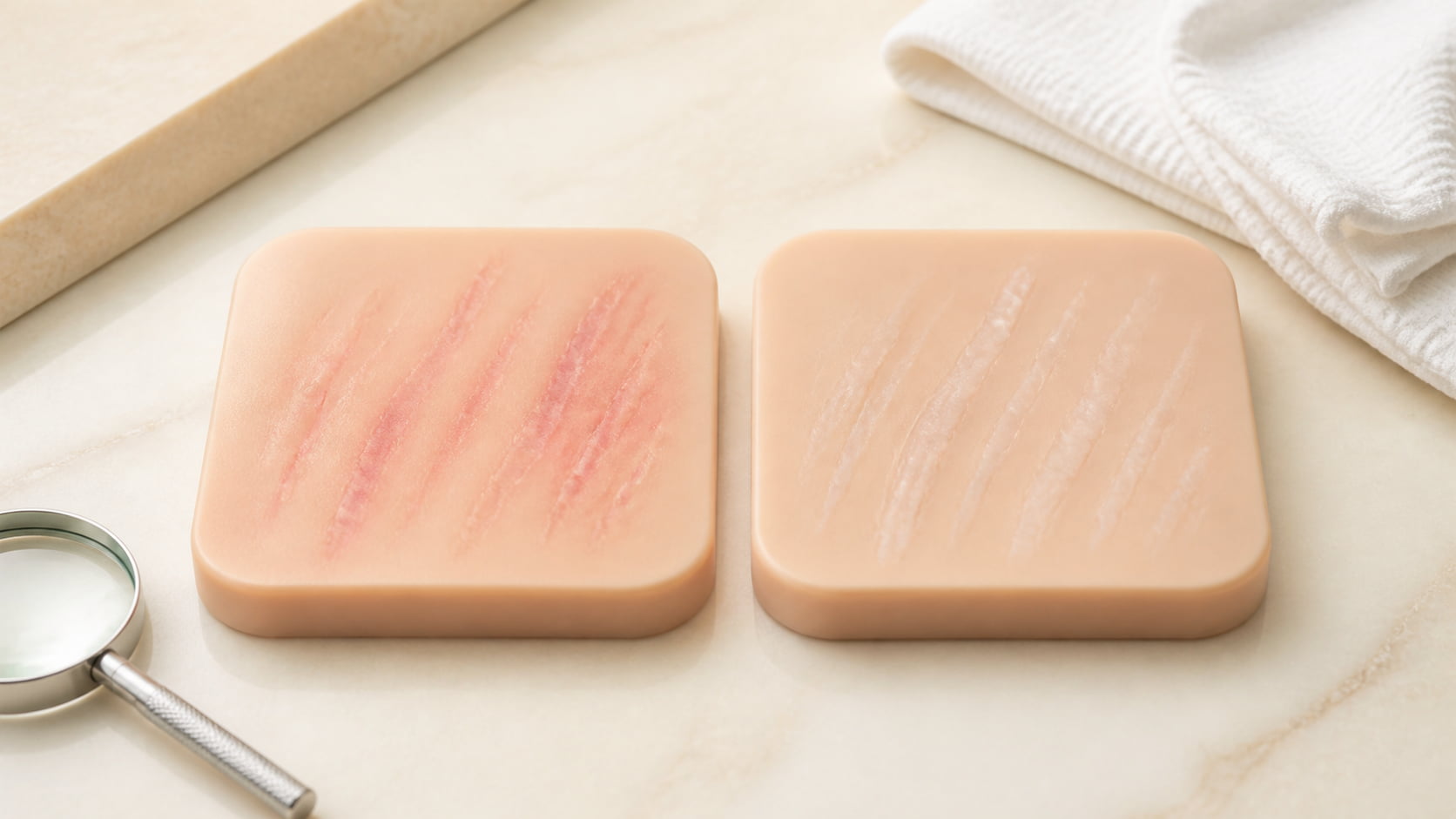
Newer stretch marks are often pink, red, purple or dark brown, depending on skin tone. These are sometimes called striae rubrae. Over time, they usually become paler or silvery and are known as striae alba.
Although stretch marks often fade naturally, creams and oils cannot guarantee that they will disappear. Professional treatment cannot erase them completely either. A realistic goal is to soften their colour, depth and texture so that they blend more evenly with the surrounding skin.
How soon can postpartum stretch mark treatment begin?
It is more helpful to think in stages than to count down to one particular date.
The first six to eight weeks: focus on healing
The early postpartum period is a time of significant recovery. Bleeding, tenderness, disrupted sleep, hormonal changes and wound healing all place demands on the body.
If you had a caesarean birth, the visible incision is only one part of the tissue that needs time to repair. An elective aesthetic procedure over or close to an incompletely healed area would not be appropriate.
Your routine postnatal appointment, commonly held around six to eight weeks after delivery, is a useful first milestone. However, it should not be treated as an automatic green light for cosmetic treatment.
Use this appointment to discuss your healing, medication, pain, scar sensitivity or any complications with your doctor. Seek medical advice promptly if you have increasing redness, discharge, heat, swelling, worsening pain or an opening around a surgical wound.
Around three to six months: assessment may be more useful
By this point, postpartum swelling may have decreased and the abdomen may be changing less rapidly. For some mothers, this is a reasonable time to request an aesthetic assessment.
Others may benefit from waiting longer, particularly if their weight is still changing, a caesarean scar remains sensitive or another health concern requires attention.
During a consultation, the practitioner can examine the colour, depth and location of the stretch marks. Your skin tone, sensitivity, healing history and tendency to develop pigmentation will also influence the recommendation.
An assessment does not mean that treatment must start immediately. It can simply help you understand what may be possible once you are eligible.
After breastfeeding: treatment can be considered at Roxana
Breastfeeding requires a clear and cautious answer. Research into many elective cosmetic procedures during lactation remains limited, and clinics may follow different protocols.
Roxana’s current eligibility guidance for stretch-mark removal in Dubai excludes clients who are breastfeeding. In practical terms, you can enquire about treatment and plan ahead, but your treatment course should begin only after breastfeeding has ended and the clinic has confirmed that you are suitable.
This caution also applies to home skincare. Retinol and prescription retinoids such as tretinoin are sometimes mentioned in discussions about newer stretch marks. Do not begin using them during pregnancy or breastfeeding unless your doctor specifically confirms that the product is appropriate for you.
“Topical” does not automatically mean suitable for every stage of pregnancy or motherhood.
What if you had a caesarean birth?
A stretch mark and a caesarean scar are different concerns. A stretch mark develops within skin that has expanded quickly, whereas a caesarean scar is the result of a surgical incision.
Even when the surface of the incision appears closed, deeper tissue continues to recover. Wait for medical clearance before having an aesthetic treatment on the abdomen.
Tell your practitioner if you have numbness, pulling, tenderness or raised or darkened scarring. Treatment may need to avoid the surgical scar, use adjusted settings or be postponed.
A responsible stretch mark treatment after pregnancy begins by separating a cosmetic concern from an issue that may require medical, physiotherapy or pelvic-health assessment.
Which stretch-mark treatments may be discussed?
The most appropriate method depends on whether your marks are new or mature, their depth, the area affected, your skin tone and the amount of downtime you can manage.
Frax Pro fractional laser
Roxana’s dedicated stretch-mark treatment uses Candela Frax Pro fractional laser technology. Fractional energy creates controlled microscopic treatment zones rather than treating the entire skin surface at once. This encourages gradual collagen remodelling while the surrounding tissue supports recovery.
For someone searching for laser stretch mark removal Dubai, Frax Pro may be considered for newer or older marks, including those on the abdomen.
Older white stretch marks may require several sessions because the underlying structural changes are more established. The plan should be adjusted according to the depth, colour, location and response of the marks—not based on a standard package.
You can learn more about the technology on Roxana’s Frax Pro skin-resurfacing page.
Microneedling
Microneedling creates controlled microchannels that encourage the skin’s natural repair response and collagen production.
Although microneedling for stretch marks may be considered as part of a wider skin plan, suitability depends on the treatment area, the condition of the skin and the practitioner’s assessment. Active infection, inflammation or difficulty healing may make it unsuitable.
Microneedling and fractional laser are not interchangeable. One may be more suitable than the other depending on your skin tone, the age of your stretch marks and your tolerance for recovery time.
Morpheus8 Pro
Morpheus8 Pro combines microneedling with radiofrequency energy. It may be assessed when stretch marks appear alongside mild skin laxity or uneven texture.
This does not mean that a combination of treatments is always necessary. More technology does not automatically produce a better result. Every additional treatment should address a specific concern and have a clear reason for being included.
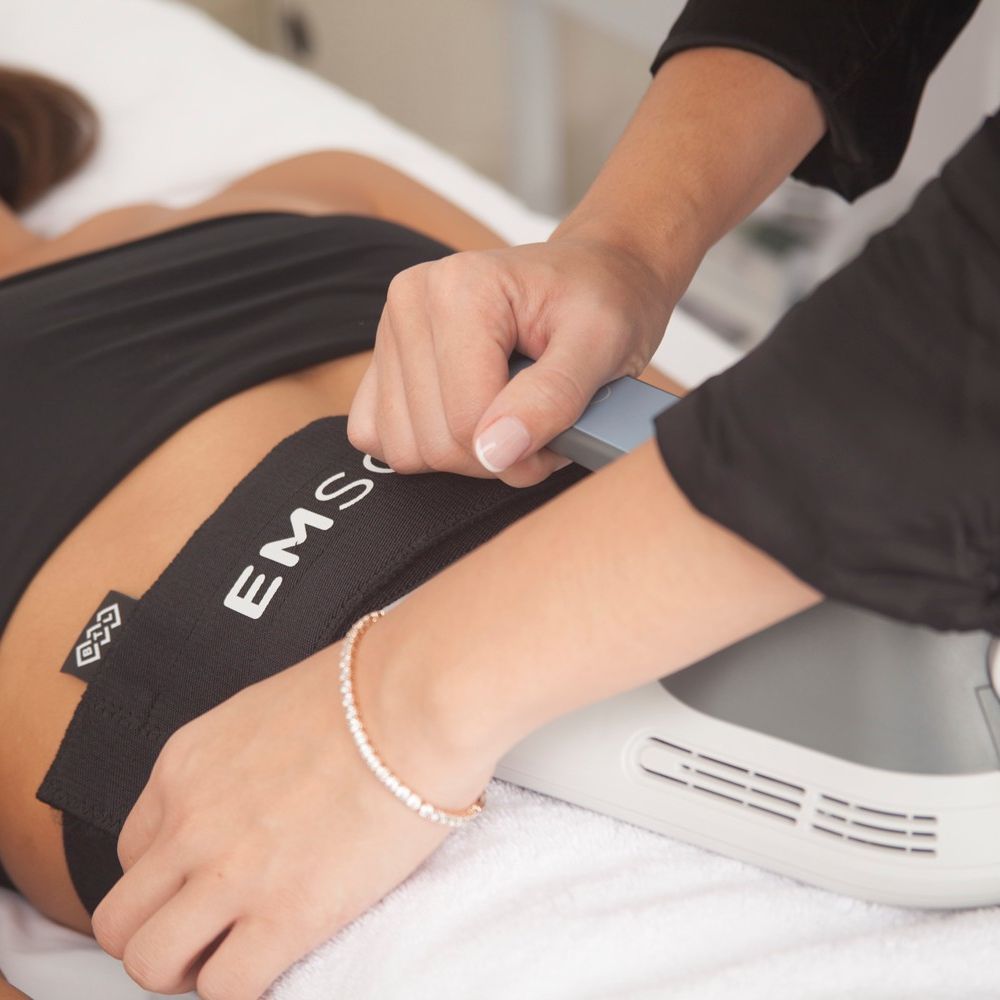
Stretch marks can also appear alongside loose skin, localised fat or changes in muscle tone, but these are separate concerns. If they bother you, Roxana may assess whether Alma PrimeX body contouring or another service is relevant after postpartum clearance.
Body contouring does not remove stretch marks, repair a hernia or replace rehabilitation for diastasis recti.
How should you prepare for a consultation?
You do not need to arrive with a treatment already chosen. In fact, it is often better not to.
Bring a list of your medication and skincare products. Be prepared to explain whether you are breastfeeding, how you delivered, whether your recovery involved any complications and whether you are considering another pregnancy soon.
Questions worth asking include:
- Is my skin ready for treatment?
- Are my stretch marks still changing naturally?
- Which treatment are you recommending, and why?
- How many sessions might be required?
- What discomfort or downtime should I expect?
- Is there a risk of temporary or lasting pigmentation?
- What improvement is realistic for my skin?
- Which products should I stop before and after treatment?
Another pregnancy does not make previous treatment pointless, but it may stretch the skin again and cause new marks. If you plan to become pregnant again soon, waiting could be the more practical choice.
A stable weight, consistent sun protection and the ability to follow aftercare can also make treatment easier to plan.
What results can you realistically expect?
Improvement takes place gradually because collagen does not rebuild overnight. Some people notice smoother texture or softer colour contrast within several weeks. Deeper, mature marks may require a longer course and more than one type of approach.
Temporary redness, warmth, swelling or sensitivity can occur after laser or needling treatments. The expected downtime will depend on the device, settings and size of the treatment area.
Be cautious of anyone promising complete removal. Stretch marks are a type of scar. Even a carefully selected treatment is intended to reduce their appearance rather than return the skin to an untouched state.
Consistent before-and-after photographs can help you evaluate gradual changes more accurately than memory alone.
The right time is the time that respects your recovery
For postpartum stretch mark removal in Dubai, your postnatal check is the first milestone, not the finish line.
A consultation may become useful after early healing, often around three to six months postpartum, but treatment timing remains individual. Caesarean recovery, breastfeeding, medication, skin health, weight changes and plans for another pregnancy must all be considered.
At Roxana Aesthetics Clinic, laser stretch-mark treatment should wait until breastfeeding has ended and your suitability has been confirmed.
If your stretch marks still bother you once you feel physically recovered, book a personalised consultation with Roxana Aesthetics Clinic. You will receive a professional skin assessment, an honest discussion of likely results and a plan built around your body and your stage of motherhood—not somebody else’s timetable.