Acne eventually fades, but the marks it leaves behind often stay long after the breakouts themselves have cleared.
Even once your skin has calmed down, small reminders of past acne can keep showing up in the mirror. It might be subtle discolouration around the cheeks, faint scars along the jawline or patches that make your complexion look dull.
Acne scars and dark marks are common in people of all ages and skin types. This is especially true in a sunny climate like Dubai, where sun exposure can intensify discolouration.
A chemical peel for acne scars and pigmentation is a dermatology treatment that works with your skin rather than against it.
Done well, a chemical peel lifts away damaged skin and encourages regeneration, so brighter, smoother skin gradually shows through.
If you’ve been looking into acne scar treatment in Dubai, a peel is often the first step towards clearer, healthier-looking skin.
Why Acne Scars and Pigmentation Develop
Knowing how each problem forms makes it easier to see why one treatment can work on both.
Acne scars form when inflammation from a breakout damages the deeper layers of your skin. During the healing process, your body makes new collagen to repair the area. If collagen production is irregular, the skin can be left with small depressions or a rough texture.
The dark marks that often follow a breakout form through a different process altogether.
When your skin is inflamed by acne, sun exposure or irritation, it may produce excess melanin. That extra pigment shows up as darker patches, which dermatologists call post-inflammatory hyperpigmentation.
It’s common to have both at the same time, with mild scarring sitting alongside an uneven skin tone.
That’s why dermatologists often recommend treatments that stimulate skin renewal, and a chemical peel does exactly that.
How Chemical Peels Improve Skin
A chemical peel is a form of skin resurfacing that uses a controlled exfoliating solution on your skin.
The solution gently removes the outermost layer of dead skin cells and sets off your skin’s natural healing process. As your skin renews itself, fresh cells replace the older, damaged ones.
Over time, this cycle of renewal can lead to visible changes in your skin, such as:
-
brighter skin tone
-
smoother texture
-
faded dark spots
-
softer acne scars
-
improved overall skin clarity
Because a single chemical peel can work on several problems at once, it’s often part of a wider acne scar treatment programme.
Chemical Peels Available at Roxana Aesthetics Clinic
Every skin type responds differently to treatment. The right choice depends on the depth of your discolouration, the severity of the scarring and how sensitive your skin is.
The clinic offers several chemical peel treatments, and each one below works on acne scars, dark spots or both.
TCA Peel
A TCA peel (trichloroacetic acid peel) is often recommended for deeper skin concerns. It’s a medium-depth peel, stronger than a light peel but gentler than a deep chemical peel.
Unlike superficial peels, TCA penetrates into the skin’s middle layers rather than stopping at the surface. There it stimulates collagen, which helps soften the appearance of acne scars and even out skin tone.
If you have moderate scarring or stubborn discolouration, TCA is often used as part of a structured chemical peel treatment plan.
Meladeep Peel
The Meladeep peel is designed specifically for dark patches caused by melasma and sun damage.
This treatment regulates melanin production and gently exfoliates the skin at the same time. Because it targets the underlying cause of the discolouration, Meladeep helps fade dark spots and brighten your skin.
It’s often recommended as a targeted skin pigmentation treatment when the main problem is a patchy, uneven tone.
Glycolic Peel
A glycolic peel is a superficial chemical peel that’s widely used in dermatology clinics.
Glycolic acid is an alpha-hydroxy acid derived from sugar cane, and it exfoliates the skin’s surface to help remove dull, damaged cells.
As a gentle, superficial peel, glycolic is usually suggested for:
-
mild discolouration
-
uneven tone
-
early acne scarring
-
dull skin texture
Many people start with a glycolic peel and move on to a deeper treatment if their skin needs more.
Mandelic Peel
A mandelic peel is especially suitable for sensitive skin and for people with a darker skin tone.
Because mandelic acid penetrates the skin more slowly, it reduces the risk of irritation and still gives you effective exfoliation.
With that gentler action, mandelic peels are commonly used to treat:
-
post-acne dark marks
-
mild acne breakouts
-
uneven skin texture
If you want a gentle peel that’s still safe and effective, mandelic acid offers a good balance of comfort and results.
Salicylic Peel
A salicylic peel is often recommended if your skin is acne-prone or oily.
As a beta-hydroxy acid, salicylic acid penetrates deep into the pores, where it helps dissolve excess oil and calm inflammation. That makes it a good choice if you still get active breakouts alongside your acne marks.
For skin like this, salicylic peels can help improve:
-
active acne
-
clogged pores
-
oily skin
-
marks left behind by old breakouts
As part of a treatment for acne and its marks, salicylic peels help keep your skin clear while your tone gradually evens out.
Cosmelan Peel
For stubborn dark patches, the Cosmelan peel is one of the more specialised options the clinic offers.
Cosmelan works differently from a traditional chemical peel, because instead of only exfoliating the skin, it regulates the enzyme behind melanin production. This helps stop new pigment from forming while fading the marks you already have.
At the clinic, Cosmelan is commonly recommended for people dealing with:
-
melasma
-
sun spots
-
dark marks after acne
-
persistent uneven skin tone
Many people see a marked improvement in how clear their skin looks after completing the full Cosmelan protocol.
What Happens During a Chemical Peel Treatment
A chemical peel procedure usually starts with a skin consultation to work out which type of peel suits you. This is also when you can raise any questions about downtime or how many sessions you might need.
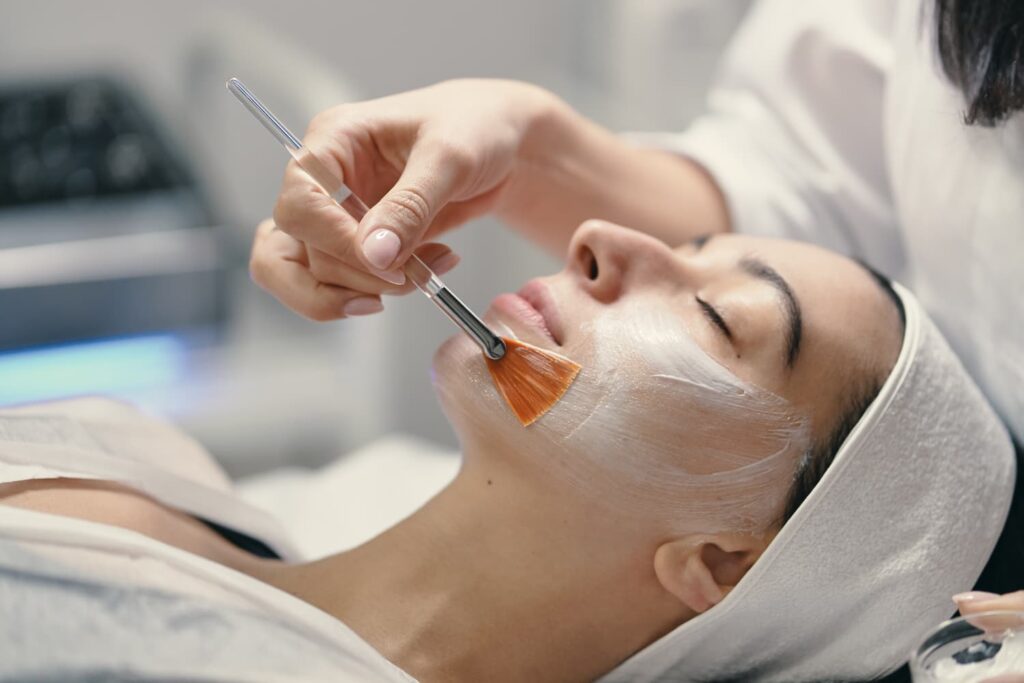
Once your skin is cleansed and prepared, the chemical solution is carefully applied across the treatment area.
You may feel mild tingling or warmth for a few minutes while the peel activates. Once the treatment is finished, soothing products are applied to calm and protect your skin.
Over the following days, your skin may peel and flake lightly as new skin replaces the older layers. While it heals, follow the post-care instructions your practitioner gives you, especially the advice to avoid sun exposure.
Recovery and Results
Your recovery time depends on the depth of the chemical peel, so it differs between the options above.
A superficial peel such as glycolic or mandelic usually means minimal downtime. Medium and deep peels require longer recovery, and TCA may cause visible peeling for several days.
Within one to two weeks, you’ll usually start to see a difference in your skin tone and texture.
To achieve your desired result, dermatologists often recommend a course of treatments with follow-up sessions spaced several weeks apart.
Going gradually gives your skin time to heal properly between sessions, which supports long-lasting results.
Why Professional Chemical Peels Are More Effective
Plenty of skincare products claim to copy a professional peel, but the gap in strength and technique is significant.
At-home products contain low concentrations of active acids, while a professional chemical peel treatment uses a medical-grade formulation with a higher concentration. It’s applied by a trained practitioner rather than by you at home.
This lets a professional peel safely work at a deeper level, so the improvements are more noticeable.
If you’re dealing with persistent acne scars or discolouration, a professional peel tends to give more reliable results than an at-home product.
A Personalised Approach at Roxana Aesthetics Clinic
Founder Roxana Diaconu set out to build Roxana Aesthetics around consultations of at least 30 minutes and always following up with clients. Each peel plan starts from your specific skin concerns rather than a set formula.
With TCA, Meladeep, glycolic, mandelic, salicylic and Cosmelan peels available, practitioners can combine them to treat acne scars and discolouration together.
The aim is to guide your skin through a controlled process of renewal and repair, with exfoliation as the first step.
Over time, this personalised approach helps you work towards clearer, healthier-looking skin.
Final Thoughts
Acne scars and dark marks can take years to develop, so effective treatment takes patience and the right approach. Results build over a series of sessions rather than appearing after one visit.
A chemical peel for acne scars works by encouraging your skin to regenerate naturally. Peels stimulate new cell growth as they remove damaged layers, which gradually brings back a smoother texture and a more even skin tone.
Performed by experienced practitioners and combined with targeted treatments such as Cosmelan, chemical peels can make a clear difference to how your skin looks.
If you’re comparing acne scar treatment options in Dubai, book a consultation to talk through which peel makes sense for your skin.