Skin Pen microneedling at Roxana Aesthetics Clinic is a medical-grade microneedling system designed for precise depth control and consistent results.

4 installments pay later
Enjoy Flexible Payment Plans & Exclusive Discounts on Your Aesthetic Treatments.
Start typing to search treatments and pages...
Searching...
No results found. Try a different keyword.
Microneedling in Dubai at Roxana Aesthetics uses the Skin Pen to make tiny, controlled punctures in the top layer of your skin. Your body reads each one as a small injury and starts to repair it straight away. That repair work stimulates collagen and elastin, the two proteins that keep skin firm and smooth. Because the results come from your own healing, they build gradually over the course and look natural.
Microneedling treatment is also known as collagen induction therapy, a name that describes what it sets out to do. It’s a minimally invasive treatment with no incisions and no heat, which is why many people try it before stronger options. Clients usually ask about it for acne scars or fine lines that make-up no longer hides. Others want smaller-looking pores or a more even skin tone without a long recovery.
Skin Pen microneedling uses thin, sterile needles set into a pen-shaped, motorised device. The practitioner glides it over each treatment area in slow, overlapping passes, working one zone at a time. The needles move up and down quickly, so each puncture stays shallow and evenly spaced across the skin. These micro-needles leave a grid of tiny channels that are too small to see once the redness fades.
A handheld derma-roller works on a similar idea, but a motorised device gives far more control over depth and spacing. Rollers enter the skin at an angle as they turn, and they can drag or tear the surface if used badly. This device presses straight down and lifts straight out to keep each channel clean and upright. It also lets the practitioner work close to the nose, lips and eyes without pulling at the skin.
Control matters on the face, where skin is thin under the eyes and much thicker over the cheeks. Depth can be set lower on delicate areas and deeper where scars sit, all within the same visit. This precision is the main advantage over traditional microneedling with a roller, which works at one fixed depth.
Dubai’s climate is hard on skin, even for people who look after it well. Strong sun for most of the year breaks down collagen, and long hours in air conditioning dry the surface out. Over time, sun damage tends to show as uneven skin tone and early wrinkles across the forehead and cheeks. Pores can look larger as the skin loses firmness, and old acne marks become easier to see.
Microneedling suits this climate because it works under the surface rather than stripping the outer layer away. Many people find it a gentler skin rejuvenation option than a strong peel, with little downtime for most skin types. You’ll still need strict sun care afterwards, because fresh skin marks easily in Dubai’s strong light. Planning your course around the hotter months makes that aftercare much easier to manage.
The first change most people notice is a brighter, smoother surface that reflects light better. As collagen builds, uneven skin texture becomes finer and make-up sits more evenly on the skin. The appearance of scars softens over the course, and acne scars look shallower in daylight. Fine lines and shallow wrinkles look less sharp, and the skin feels a little thicker when you touch it.
Progress with microneedling treatment is gradual, and how far it goes depends on your skin and your concern. Microneedling won’t erase deep scars or lift sagging skin in the way surgery can, and it isn’t meant to. It can give a clear improvement in skin quality, and that improvement comes from your own tissue. Your practitioner will be honest at the consultation about what’s realistic for you.
Founder Roxana Diaconu built the clinic around hour-long consultations and always following up with clients. For microneedling, that time goes on looking closely at your skin and asking about your history. The practitioner checks for active breakouts, sensitivity and any skin condition that should be treated first. You then hear whether microneedling is the right skin treatment for you, or whether another option fits better.
The clinic is at 825 Al Wasl Rd, Al Safa 2, Dubai, UAE. Book a consultation to find out whether a course of microneedling treatment suits your skin and your goals.

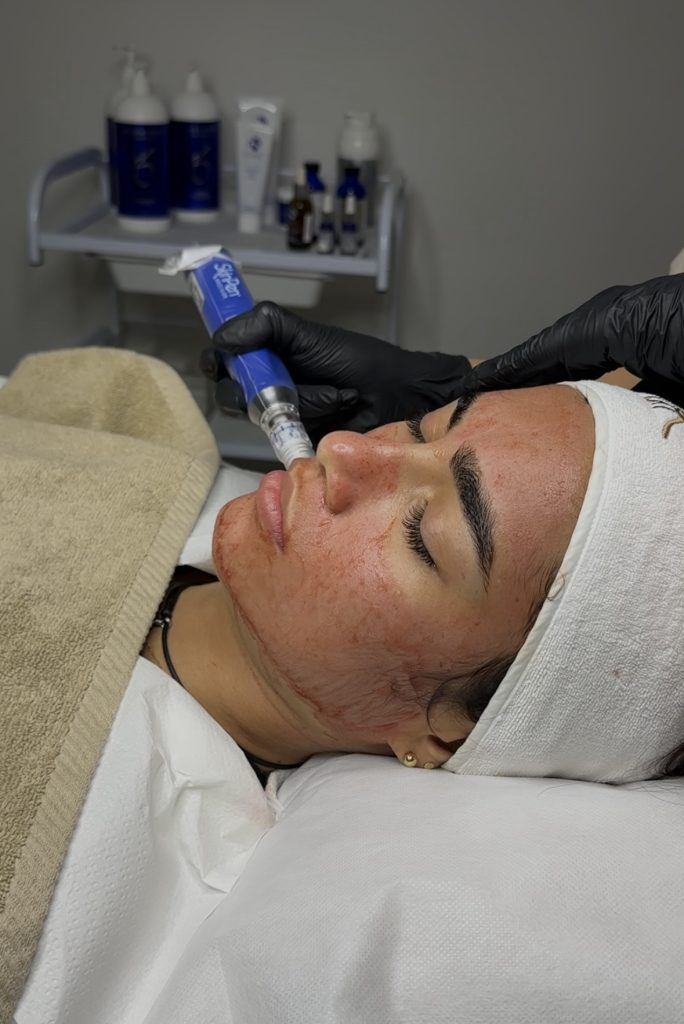
Microneedling uses tiny sterile needles to create thousands of controlled microchannels in the skin. These small wounds set off a healing response that carries on for several weeks after each visit. The tiny punctures close within hours, and then the slower work of rebuilding begins below the surface. Fibroblast cells in the dermis lay down new collagen and elastin to repair the treated tissue.
This is why microneedling is often called collagen induction therapy, and why results take time to build. It’s a form of skin rejuvenation that reaches the dermis while the surface stays largely intact. Each session stimulates collagen a little further, so the benefit adds up from one visit to the next. Over a full course, that extra support shows as firmer and smoother skin with a finer surface.
Your skin has three main layers, and each one plays a different part in how your face looks. The epidermis is the top layer you see and touch, and it renews itself all the time. Below it sits the dermis, the deeper layer where collagen and elastin give skin its strength and spring. The fatty layer underneath gives the face its shape, and this treatment leaves it alone.
Microneedling works mainly in the epidermis and upper dermis, where most visible problems start. That’s where acne scars form and where fine lines and wrinkles first begin to show. By reaching these layers of the skin without opening the surface, it works on the tissue behind the problem. Because the outer skin is barely disturbed, most people heal quickly and get back to normal routines soon after.
Needle depth decides what each pass can do, so it’s set with care for every part of the face. Shallow settings help with dullness and overall texture on thin or sensitive skin. Longer needles penetrate deeper into the dermis, which suits rolling scars and deeper wrinkles. Your practitioner sets the depth for each zone of the face, rather than using one setting everywhere.
Going deeper does not always help, and more depth is not the same as better results. Too much depth on thin skin raises the risk of bruising and slow healing, with little extra benefit. A careful plan starts within a comfortable range and adjusts from session to session as your skin responds. The aim is steady progress, with skin that heals well after every visit.
Collagen gives skin its structure, and the body’s natural collagen production slows from early adulthood onwards. Sun exposure speeds the loss, and in Dubai that exposure is strong for most of the year. Smoking and poor sleep add to the damage, leaving thinner skin that forms wrinkles more easily and recovers more slowly.
Microneedling can’t stop this process, but it stimulates collagen on a regular schedule. It can help restore some of the thickness and spring that sun and time take away. That’s why some people use it to prevent early signs of ageing as well as to correct them. Starting before wrinkles set in can help the skin stay thicker for longer, and older skin still responds, only more slowly.
The punctures in the skin are far smaller than a cut or a graze, and they close quickly. Even so, the body treats them as real damage and sends repair cells to the area straight away. Growth factors are released, and blood flow rises for a while to feed the healing tissue. Fibroblasts then multiply and start producing the fresh fibres that give skin its structure.
Repair happens in stages over the weeks and months after each session. In the first days, the skin settles inflammation and seals the surface to protect what lies underneath. Over the following weeks, new tissue is laid down in a loose mesh beneath the surface. Across the next few months, that mesh tightens into stronger, better-organised fibres.
That’s the natural healing process the whole treatment relies on, from the first session to the last. Nothing foreign is injected into the skin, and nothing is burned away by heat or light. The new collagen sits in a neater pattern than old, scarred tissue. Because it’s your own repair, the result looks like your skin, only smoother and firmer.
A typical microneedling treatment follows the same few steps from start to finish.
Most people describe the feeling as light scratching or a buzzing vibration rather than pain. Bony spots such as the forehead and jawline can feel sharper than the softer cheeks. Right after the session, your skin looks pink to red, a little like mild sunburn after a day outdoors. It may feel tight and warm for the rest of the day, which is normal.
One session can brighten the skin a little, but collagen takes time to build up properly. Most microneedling treatment plans use a course of sessions, spaced several weeks apart so each round of repair can finish. Your practitioner will suggest how many you need after looking closely at your skin. Deep acne scars usually need more sessions than fine lines or general dullness.
Noticeable results tend to appear gradually rather than overnight, and that’s normal for this treatment. Skin often looks brighter within days, while firmer texture follows over the next couple of months. Fresh collagen keeps forming after your last session, so the appearance of your skin can keep improving for a while. A maintenance session from time to time can help hold your microneedling results once the course is done.
RF microneedling adds radio frequency energy to the needles as they enter the skin. The needles deliver gentle heat into the dermis, on top of the normal collagen response. That heat helps with tightening skin that has started to loosen along the jaw and neck. Treatments at Roxana Aesthetics use devices including Morpheus8 Pro, which pairs microneedling with radiofrequency energy.
The two options suit different goals, so your skin decides which one makes sense. The RF version is often chosen for laxity, skin firmness and deeper wrinkles. Needle-only microneedling treatment with the Skin Pen suits skin texture and scars, and it usually heals faster. Your practitioner will explain which approach fits your skin at the consultation.
Laser skin resurfacing is another skin rejuvenation treatment that uses light energy to heat or remove skin in fine columns. It can give strong results on sun damage and deep wrinkles, but it often means more downtime. Some lasers also carry a higher risk of pigment problems on darker skin. Microneedling reaches some of the same goals without heat, which suits many people with medium to deep skin tones.
A laser may suit heavy pigment on fair skin, while microneedling often suits scarring and texture on any skin type. Some plans use both, spaced well apart, to get the benefit of each. Your consultation is the place to weigh these options against your skin and your diary.
Chemical peels use acids to dissolve the outer layer of skin and reveal fresher cells underneath. Light peels brighten the surface and can soften fine lines, while deeper peels treat pigment and wrinkles with more downtime. Peels work from the outside in, whereas microneedling works from the inside out. A plan can alternate the two, so the surface and the deeper layer both get attention over time.
People with sensitive skin sometimes find needling easier to tolerate than repeated acid peels. Others prefer peels for pigment and use needling for scars, and the right mix depends on your skin.
Home derma-rollers are sold widely in Dubai, but they’re a different tool from a clinic device. Their needles are short, they blunt quickly and they’re hard to keep sterile between uses. Rolling at home can scratch the skin or spread bacteria, especially over active spots. A clinic microneedling treatment uses sterile needles at a set depth, with proper skin preparation before and after.
Applying products after needling also needs care, because fresh channels let creams reach deeper than usual. That sounds helpful, but the wrong product can cause irritation or a reaction. Products used straight after needling should be ones made for that purpose and nothing else. At home, stick to the plain aftercare your practitioner gives you until your skin has settled.
Improves skin texture and smoothness
Reduces acne scars and marks
Minimizes enlarged pores visibly
Boosts natural collagen production
Improves uneven skin tone
Softens fine lines gradually
Enhances skin firmness over time
Helps skincare absorb more effectively
Is it painful? | No |
|---|---|
Is there any downtime? | Minimal. Redness usually fades within 24–48 hours. |
How many sessions needed? | Most cases require 3–6 sessions, spaced apart. |
When can I see the result? | Early improvement appears within weeks |
How long does the procedure take? | About 45–60 minutes |
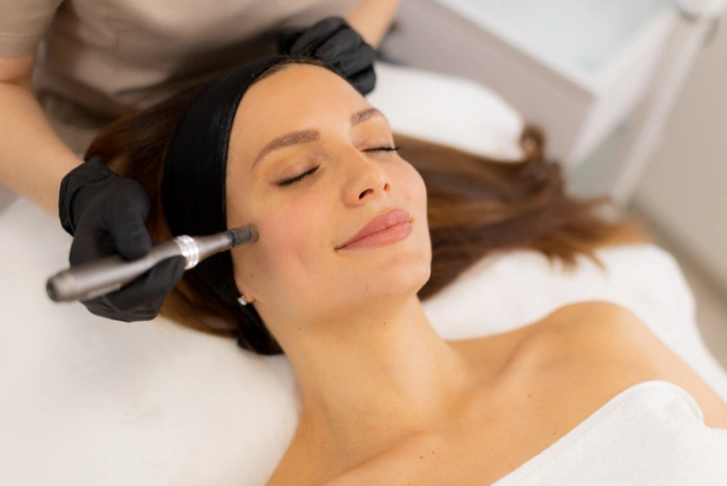
Microneedling facial treatments are adaptable and precise, so they suit several areas where texture and skin tone matter most. The face is the usual starting point, although the neck and chest respond well to the same approach. Scars or stretch marks on the body can be treated as well as the backs of the hands. Each area needs its own depth and approach, because skin thickness varies across the body.
Microneedling treatment on the face is planned zone by zone, because texture problems show differently across it. The cheeks often carry acne scars and large pores, while the forehead tends to show fine lines and wrinkles first. Around the mouth, the treatment can soften small vertical lines and refine skin texture. Your practitioner adjusts the needle depth across the face as the skin gets thinner or thicker from zone to zone.
The skin under the eyes is thin, so it needs a light touch and shallow needles. Careful passes here can help with crepey texture and fine lines without irritating the skin. Deeper settings are kept for parts with more padding, such as the cheeks and temples.
The neck and chest are often left out of skin rejuvenation plans, even though they catch the Dubai sun every day. Horizontal neck wrinkles, crepey skin and freckling are common concerns on this part of the body. Microneedling can help this skin look firmer and smoother over a course of treatment. Skin on the neck is thinner than on the face, so the practitioner sets the depth lower.
The backs of the hands lose collagen with age and sun, and the skin can start to look thin. Microneedling here can improve skin texture and give thin skin a fuller appearance. It’s often booked alongside a facial session, so your hands keep pace with your face.
Acne scars on the back and shoulders respond to microneedling in much the same way as facial scars. The skin here is thicker, so the practitioner can often work at a deeper setting than on the face. A larger zone takes longer to treat, and results build steadily over a course. This area is easy to forget in aftercare, so loose, clean clothing helps while it heals.
Stretch marks form when the skin stretches faster than its collagen can keep up. Newer, reddish marks tend to respond better than older, silvery ones that have been there for years. Microneedling treatment can soften their texture, reducing the appearance of their ridges so they blend with the skin around them. The thighs, hips, tummy and upper arms are common places to treat.
Surgical scars and old injury scars may also respond once they have fully healed and settled. Flat, pale scars usually do better than raised ones, and keloid scars need a different plan altogether.
Moles, raised lesions and broken or infected skin are always worked around during a session. The eyelids are never needled, because the skin there is too thin to treat safely. Any new mole, or one that looks different, should be checked by a doctor before treatment goes ahead.
Microneedling treatment covers a wide range of skin conditions, from scarring to dull, tired skin. These are the most common concerns, with what you can expect for each one. Results vary from person to person, so treat these notes as a guide rather than a promise. Your own plan comes from a close look at your skin during the consultation.
Acne scars are one of the most common reasons people come in for microneedling. Rolling scars and shallow boxcar scars tend to respond well, because fresh collagen lifts the base of each scar. Deep, narrow ice pick scars are harder to shift and may need other treatments as well. A course of microneedling treatments reduces the appearance of scars gradually rather than all at once.
Treatment waits until active acne has settled, because needling over live breakouts can spread bacteria and worsen inflammation. If you still get regular spots, your practitioner may suggest treating the acne first. Red or brown marks left by old spots often fade faster once the skin is renewing well.
Fine lines around the eyes and forehead are an early sign of collagen loss. Microneedling stimulates collagen in these areas, which helps the skin look smoother and more rested. It works well on fine lines and shallow wrinkles across the cheeks and forehead. Deep folds and wrinkles caused by muscle movement usually need other treatments alongside it.
Reducing wrinkles with needling is gradual, as each session adds a little more support under the surface. Daily skincare and sun protection help keep wrinkles from deepening between sessions and after the course ends. Started early, microneedling can help you keep younger-looking skin for longer, with fewer lines setting in.
Large pores often come with oily skin and a loss of firmness around each pore. As collagen forms, the skin around the pore tightens and the opening can look smaller. Many people see a smoother surface on the nose and cheeks as their microneedling treatment course goes on. Pores don’t disappear, but their appearance becomes less obvious in photos and daylight.
Sun damage is common in Dubai and shows as dull, uneven skin with patches of pigment. Microneedling speeds up cell turnover, so brighter new skin comes through sooner than it would on its own. Over time this can even out skin tone and give a more uniform overall appearance. Melasma needs extra care, because some types can flare after treatment, and your practitioner will assess it first.
Rough or bumpy skin texture is often the first thing to improve with this treatment. Shallow sessions refine the surface and leave the skin brighter and more even. Many people find their make-up sits better and needs less blending as their skin texture improves. For most people, improving texture also brings the first visible improvement in appearance.
Face
Microneedling facial treatment helps improve acne scars, fine lines, enlarged pores and uneven skin tone, including visible damage caused by sun exposure, while supporting overall skin renewal.
Neck
Targets crepey texture, early laxity, and uneven skin quality that often appears sooner than expected.
Décolletage
Treatment may improve crepey texture, early laxity and visible signs of ageing. Because these areas frequently experience sun exposure, careful aftercare and daily sun protection are essential.
Hands
Helps reduce signs of aging, uneven pigmentation, and skin thinning on the hands.
Scalp
Used selectively to support hair treatments by improving scalp circulation and product absorption.
Microneedling treatment may suit people with different skin types who notice early to moderate changes in skin quality. It works on the quality of your skin over time, and your features stay exactly as they are. It’s a good fit if you want results that come from your skin’s natural repair process. Every client should first have a professional assessment so the depth and technique suit their skin.
That assessment looks at your skin tone and sensitivity, along with your medical history and the changes you’d like to see. It’s also the time to mention past treatments, current skincare and any reactions you’ve had before. With that picture, your practitioner can plan the right depth for each area of your face. They’ll also tell you honestly if another treatment would serve your skin better.
Microneedling treatment tends to suit you if one or more of these sounds familiar:
It works on most skin types and skin tones, including darker skin. Because it stimulates collagen without heat, the risk of pigment problems is lower than with many lasers. Microneedling is considered safe for most healthy adults when it’s done by a trained practitioner with sterile needles. Results feel most satisfying when expectations are clear from the start, so ask as many questions as you need.
Men’s skin is usually thicker and oilier, and it often shows large pores and acne scars along the jaw. Microneedling treatment works well on this skin type, as thicker skin tolerates deeper settings. The beard area usually needs a close shave beforehand, and shaving should pause for a day or two afterwards. Many men like that it fits into a routine without heavy products or long recovery.
Microneedling isn’t right for everyone, or for every moment in your life. Some skin issues need treating first, and some health conditions call for a different plan. Your practitioner may advise waiting in these situations:
Cold sores need a mention too, because needling can trigger an outbreak in people who get them. Your practitioner may suggest preventive treatment first if you have a history of them. Telling the clinic about your medicines and recent procedures helps them plan safely. If you’re unsure about anything, ask at the consultation before you commit to a course.
Most side effects of microneedling treatment are mild and short-lived, with redness and tightness normal for the first day or so. Some people see light swelling or tiny spots of bleeding during the session, which settle quickly. The skin may feel dry for a few days as it renews.
Less common risks include infection, breakouts and changes in pigment. A sterile setting and careful aftercare keep these risks low, so following the advice matters. Contact the clinic straight away if you notice pus, spreading redness or pain that gets worse. Bruising can happen on thin skin, and it fades on its own.
A little preparation in the days before helps your skin heal well afterwards.
Recovery is usually quick, but it helps to know the pattern before your first session. On the day, your skin looks red and feels warm, as if you’d spent too long outdoors. By the next morning, the redness has usually faded to pink, and the skin may feel tight or dry. Most people are comfortable going out by then, with sunscreen on top.
Over the next few days, you may notice tiny flakes or a rough feel as old surface cells shed. Let them come away on their own and don’t pick or scrub. Make-up can usually go back on once the skin has closed, often by the following day. Once the flaking settles, the skin’s appearance is usually brighter and smoother.
Aftercare matters as much as the microneedling treatment itself, especially in the first couple of days. For the first day, keep your skin clean and skip make-up so the channels can close. Use only the gentle skincare products your practitioner recommends, and leave out active serums for a few days. Gentle care in this window helps promote natural repair and lowers the chance of irritation.
Sun protection is the biggest part of aftercare in Dubai, at any time of year. Fresh skin burns and marks more easily, so wear a broad-spectrum sunscreen every day and reapply it outdoors. A hat and shade help on the hottest days, especially around midday. If you spend a lot of time outside, planning sessions for Dubai’s cooler months can make life easier.
Heat and sweat can irritate healing skin, so give your workouts a short break. Skip the gym, sauna, steam room and swimming pool for a day or two. Sea water and chlorine can sting and raise the chance of infection while the skin heals. Sleep on a clean pillowcase on the first night, and keep your hands off your face.
Because redness can last a day or two, avoid booking a session right before a wedding or a big meeting. Leave a clear gap before any event where you want your skin looking its brightest. For a course, it helps to set the dates at the start so the spacing stays steady. Travel and summer holidays are worth planning around too, since sun and flights both dry the skin.
Collagen keeps building after your course ends, and long-term skin rejuvenation depends on the habits that protect it. Your natural collagen production slows with age, so daily sunscreen matters more each year. Once your skin has settled, your practitioner may suggest bringing back vitamin C or retinoids. Smoking and heavy sun exposure break collagen down and deepen wrinkles over time.
How often you come back for a top-up session depends on your skin, your age and your goals. Your practitioner can review your skin at follow-up visits and suggest when another session makes sense. Microneedling sits in the middle of the skin rejuvenation range, between gentle facials and stronger laser work. It’s often combined with other treatments in a plan, timed so your skin has space to recover between them.
Some people pair microneedling with a light-based rejuvenation treatment, such as IPL, for redness and brown spots. Others add RF microneedling later for firmness and elasticity once texture has improved. Starting with needle-only sessions shows you how your skin heals before you try anything stronger. Your practitioner will explain the order and spacing that make sense for you.
Microneedling is widely offered in Dubai, so it helps to know what to look for. A proper consultation should come before any needles touch your skin. Ask who will treat you, how depth is chosen and what aftercare looks like. Sterile needles and a clear follow-up plan are signs of a careful clinic.
Be wary of offers that skip the assessment or promise fast results on deep scars. Microneedling is gradual by nature, and honest advice from a practitioner reflects that. A practitioner who sometimes says no, or suggests a gentler start, is looking after your skin.
One client review sums up the visit: “The clinic is clean, modern, and very well managed. I highly recommend Roxana Aesthetic Clinic for anyone looking for excellent service and outstanding customer care.”
Founder Roxana Diaconu built the clinic around hour-long consultations and always following up with clients. You’ll have time to ask about sessions, downtime and microneedling cost before you decide anything. The clinic is at 825 Al Wasl Rd, Al Safa 2, Dubai, UAE. Your first visit starts with that conversation, and any treatment plan comes after it.
Feel skin texture looks uneven in certain lighting
Notice acne scars or lingering post-breakout marks
See enlarged pores that makeup doesn’t fully hide
Want firmer, healthier-looking skin without injectables
Prefer gradual, natural improvement over instant change
Are searching for microneedling near me with medical supervision
Have active acne, skin infections, or inflammation
Are prone to abnormal or keloid scarring
Have uncontrolled skin conditions
Recently had aggressive laser or resurfacing treatments
Are unable to follow post-treatment aftercare
Skin Assessment & Suitability Check
The process begins with a detailed evaluation of skin texture, tone, sensitivity, sun exposure and specific concerns. This assessment confirms whether microneedling is suitable and helps determine the correct depth and approach for the SkinPen treatment.
Skin Preparation & Cleansing
The treatment area is thoroughly cleansed to remove impurities, oil, and surface debris. Proper preparation ensures even penetration and reduces the risk of irritation.
Comfort & Numbing Phase
A medical-grade topical numbing cream is applied to ensure comfort throughout the microneedling facial procedure. This allows precise treatment without unnecessary discomfort.
Skin Pen Microneedling Treatment
Skin Pen is used with controlled depth and speed to create precise micro-channels in the skin. The technique targets specific concerns such as texture, acne scars, and pores while preserving skin safety.
Post-Treatment Soothing & Guidance
Calming and restorative products are applied immediately after treatment to support healing. Clear aftercare guidance, including advice on limiting sun exposure and using appropriate sun protection, is provided to protect results and promote proper recovery.



Book a personalised consultation to discuss your skin concerns and how microneedling Dubai can help you.

Get your customized treatment plan designed to enhance your skin’s radiance, texture, and firmness.

Enjoy visible improvements in skin texture, and tone, and a more healthy, natural glow.

I love the place:. The location easy for parking , very clean, nice smell all are very organized. I really fell with professional team

This clinic is so clean, and the staff are all friendly, and they're highly organized. I like Deanne, she is very nice, Her technique is very professional, love her do for me facial treatments. I'll definitely keep coming back. ❤️❤️

Amazing service and results for my laser hair removal! Thank you!

I want to thank Mirna for the impeccable Cosmelan treatment! The results speak for themselves and I am so happy with them. From consultation to post-treatment check-up, she has been incredibly helpful and knowledgable. I highly reccomend her for all of your treatments and I will be back for all my facials 🙌

I would like to recommend Dr Natalia for her caring about patients and her good experience and knowledge, she has a good way of communication and she is very helpful. The staff also are amazing , welcoming and very friendly. The clinic overall is very good, clean and organised.

Strongly recommend , Very good clinic and amazing service Special thanks to Dr.NatalliaThe staff also are amazing , welcoming and very friendly. The clinic overall is very good, clean and organised.

Skin Pen microneedling at Roxana Aesthetics Clinic is a medical-grade microneedling system designed for precise depth control and consistent results.
Microneedling Dubai treatments can be done year-round with proper sun protection.
Skin Pen microneedling offers greater precision, safety, and consistency compared to basic devices.
Microneedling uses fine needles to create tiny punctures in the skin, triggering the body’s natural healing response and stimulating collagen production.
Typically, 3-6 sessions are recommended, spaced 4-6 weeks apart, depending on your skin’s condition and goals.
Most clients experience mild discomfort during the treatment. A numbing cream is applied beforehand to enhance comfort.
There is minimal downtime; you may experience some redness and slight swelling, which usually subsides within a few days.
SkinPen provides precise depth control and uses tiny sterile needles to create consistent microchannels. This controlled form of collagen induction therapy can target a range of skin concerns while helping to minimise avoidable side effects when performed by a qualified practitioner.
Expected temporary side effects may include redness, mild swelling, sensitivity, dryness and light flaking. Your practitioner will explain the risks and aftercare requirements before treatment.
Microneedling may be performed on many skin types, but suitability must be confirmed during a consultation. The practitioner will consider your skin tone, sensitivity, medical history and current skin condition.

Medically reviewed by
Dermatologist · DHA licence 69700032
This page is general information and does not replace a consultation.
Microneedling Dubai
Prices start from
AED 1050
Prices start from AED 1050 and may vary depending on the personalised treatment plan recommended by our aesthetic doctors.
Your health is our priority. Schedule your appointment today to connect with our trusted specialists and receive the care you need.
Partnered with:
