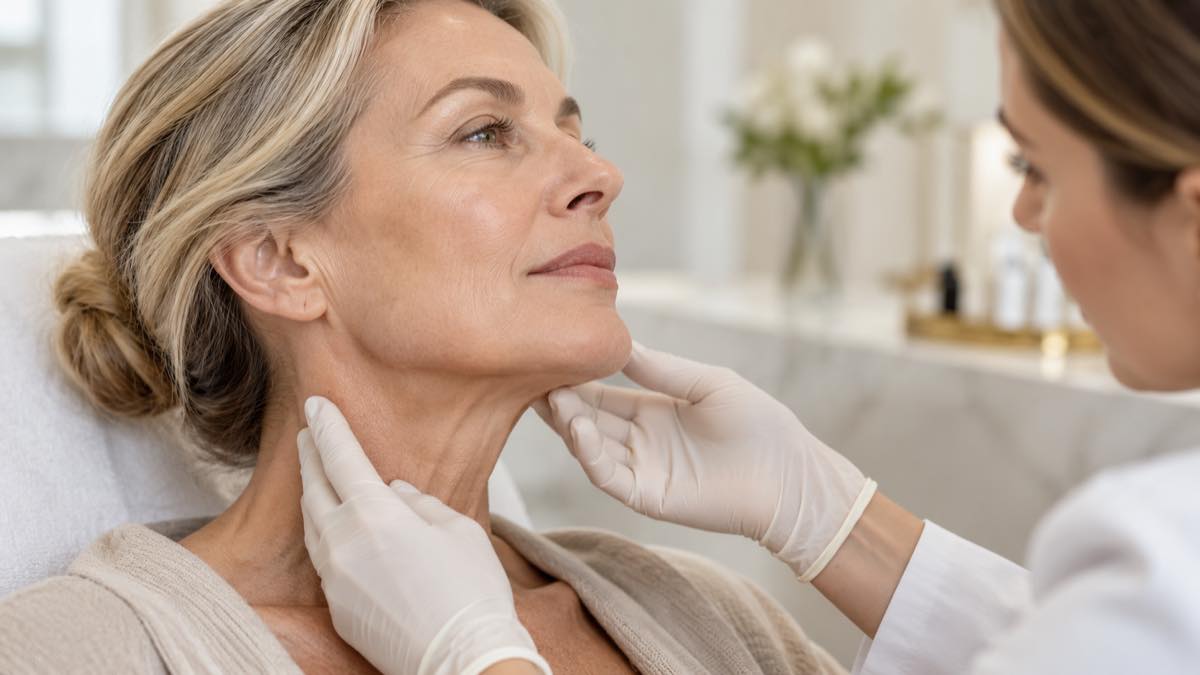

In short: Many people notice tighter, flakier or more sensitive skin in Dubai from about November, even though average humidity isn’t lower than in summer. The main causes are cooler air, which means less sweat and oil, plus wind and dust, longer hot showers, constant air-conditioning, more time outdoors, holiday travel to cold countries, and starting stronger skincare. A gentle barrier-repair routine usually helps. Hydrating facials, skin boosters and a dermatology review for eczema or rosacea can add more.
Key takeaways
- Dubai’s cooler season isn’t drier by average humidity. The “winter dryness” people feel comes mainly from temperature, wind and habits.
- In cooler weather, skin produces less sweat and oil, so the barrier loses water more easily, especially with hot showers.
- Research shows skin water loss tends to rise in autumn and winter in many climates.
- Gentle cleansing, a richer moisturiser and daily sunscreen form the foundation. UV stays strong in Dubai’s cooler months.
- Hydrating facials and skin boosters can improve skin comfort and quality. Persistent itching or rashes need a dermatologist.
Is Dubai really drier in winter?
Not on average. Dubai’s cooler months (roughly November to March) bring lower temperatures, but average relative humidity is similar to, or slightly higher than, the summer months. So if your skin feels drier, the cause is more likely what happens to your skin in these months than the air itself.
Why skin feels drier from November
| Cause | Why it affects skin |
|---|---|
| Cooler temperatures | Less sweat and oil, so less natural moisture on the skin surface |
| Wind and dust | Shamal winds and outdoor time can irritate and dry exposed skin |
| Longer, hotter showers | Hot water strips natural oils; more people take hot showers when it’s cooler |
| Air-conditioning | Still widely used indoors; dries the air around you and the skin barrier |
| More time outdoors | Beach, desert, sport and terraces mean more sun, wind and sometimes very dry desert air |
| Holiday travel | Cold, dry destinations and long flights in low-humidity cabins |
| “Treatment season” | Many people start retinoids, acids, peels or lasers in the cooler months, which can dry or irritate skin if not balanced |
| Indoor heating while travelling | Very low indoor humidity in colder countries |
Who notices it most
- People with eczema (atopic dermatitis), whose barrier is already weaker
- People with rosacea or sensitive skin, as wind and temperature swings can trigger flushing (see the guide to rosacea in the UAE climate)
- Mature skin, which produces less oil
- Anyone starting retinoids, acids or resurfacing treatments
- People who travel to cold countries over the holidays
A simple cooler-season routine
Morning
- Gentle, non-foaming or cream cleanser (or just water if your skin is very dry)
- Hydrating serum with humectants such as hyaluronic acid or glycerin, applied to damp skin
- Moisturiser with barrier lipids such as ceramides, cholesterol or squalane
- Broad-spectrum SPF 30 or higher, every day, because UV in Dubai remains meaningful in the cooler months
Evening
- Gentle cleanse; double-cleanse only if wearing heavy sunscreen or make-up
- Active ingredients (retinoid or acid) a few nights a week rather than nightly, if skin is reactive
- A richer moisturiser; a thin occlusive layer on very dry patches
Habits
- Shorter, lukewarm showers, then moisturise within a few minutes
- A humidifier in your bedroom if you use air-conditioning overnight
- Lip balm and hand cream, especially outdoors and on flights
- Carry hydrating mist and moisturiser when travelling to cold destinations
Treatments that help
| Concern | Treatment options | What it does |
|---|---|---|
| Dull, dehydrated skin | HydraFacial, Korean facial | Gentle cleansing, exfoliation and hydration with no downtime |
| Ongoing dehydration, fine lines, poor skin quality | Skin boosters such as Profhilo, RRS HA or Rejuran | Injected hydration and support for skin quality over a course |
| Tired, crepey skin | Anti-age facial, Rejuran, collagen stimulators | Skin quality and firmness |
| Uneven tone after summer | Brightening facial, gentle peels, carefully planned laser | Pigmentation treatment; the cooler months are a common time to start |
| Eczema, rosacea, persistent itching | Dermatology consultation | Diagnosis and medical treatment |
A note on “treatment season”: the cooler months are a popular time to start peels and lasers for summer pigmentation, but sun protection is still essential, and over-treating already-dry skin causes irritation. Balance actives with barrier repair, and space treatments sensibly.
When to see a dermatologist
- Itching that disturbs sleep, red or scaly patches, or cracks that bleed
- Flaking that doesn’t improve after two to three weeks of gentle care
- A rash on the face that flares with heat, cold or skincare
- Very dry skin with other symptoms, such as tiredness or weight change
How Roxana Aesthetics can help
At Roxana Aesthetics Clinic on Al Wasl Road, a skin assessment can identify whether dryness is a barrier issue, a reaction to products, or a condition such as eczema or rosacea. Options include hydrating facials such as HydraFacial and Korean facials, skin boosters and dermatology care. Pigmentation treatments started in the cooler months are planned with barrier support.
The bottom line
Dubai’s cooler months aren’t drier on paper, but cooler air, wind, hot showers, air-conditioning, travel and stronger skincare can all leave skin tight and flaky from November. A gentle routine with richer moisturiser and daily sunscreen usually helps. Hydrating facials and skin boosters can improve comfort and quality further, and a dermatologist can treat eczema or rosacea. Book a consultation with Roxana Aesthetics for a cooler-season skin plan.
Frequently asked questions
Why is my skin dry in Dubai in winter?
Cooler temperatures mean less sweat and oil, so the skin loses water more easily. Wind, dust, longer hot showers, air-conditioning, more outdoor time, travel to cold countries and starting stronger skincare all add up. Average humidity isn’t lower than in summer, so habits and temperature are the main drivers.
Do I still need sunscreen in Dubai’s winter?
Yes. UV levels in Dubai stay meaningful during the cooler months, and people often spend more time outdoors. Daily broad-spectrum SPF 30 or higher helps prevent pigmentation and premature ageing. It is especially important if you’re using retinoids or having peels or laser.
Is HydraFacial good for dry skin?
HydraFacial combines gentle cleansing, exfoliation and hydrating serums, so many people find it improves dull, dehydrated skin with no downtime. It works best alongside a good home routine. If dryness comes with itching or rashes, a dermatology assessment is a better first step.
Can skin boosters help dehydrated skin?
Skin boosters such as Profhilo, RRS HA or Rejuran are injected to improve hydration and skin quality over a course of sessions. They suit persistent dehydration and fine, crepey lines rather than short-term flaking. Your clinician can advise which product suits your skin.
Should I stop my retinol in winter?
Not necessarily, but you may need to use it less often, or buffer it with moisturiser if your skin becomes dry or irritated. Pair it with a richer moisturiser and daily sunscreen. If irritation continues, reduce frequency and seek advice.
Is it a good time to start laser or peels in November?
The cooler months are a popular time to start pigmentation treatments, because many people spend less time in intense sun. You still need daily sunscreen, and treatments should be balanced with barrier care so skin doesn’t become irritated.
Why does my eczema flare in Dubai’s cooler months?
Eczema-prone skin has a weaker barrier, so cooler air, hot showers, wind and dry indoor air can trigger flares. Gentle cleansing, frequent moisturising and avoiding irritants help. Persistent or severe eczema should be reviewed by a dermatologist.
What is the best moisturiser for Dubai winter skin?
Look for a fragrance-free moisturiser with barrier lipids such as ceramides, plus humectants such as glycerin or hyaluronic acid. Thicker creams suit very dry skin. The best one is the one your skin tolerates and you use consistently.
This article is general information, not a substitute for medical advice. Persistent dryness, itching or rashes may need a dermatologist’s diagnosis.